Showing posts with label anglican. Show all posts

21 October 2009

Yay! Church politics.

My good friend Moff posted on teh Facebook about this story. Here's how it begins:

Vatican Bidding to Get Anglicans to Join Its Fold

Published: October 20, 2009

VATICAN CITY — In an extraordinary bid to lure traditionalist Anglicans en masse, the Vatican said Tuesday that it would make it easier for Anglicans uncomfortable with their church’s acceptance of female priests and openly gay bishops to join the Roman Catholic Church while retaining many of their traditions.


This has been the cause of much hand-wringing in Anglican circles, and in the press. My opinion (as expressed in a Facebook comment), while not particularly noteworthy, seemed wordy enough to merit reproduction on the blog. So here it is, FWIW:

Speaking as a (remarkably) piss-poor Anglican, I say: whatevs. Bottom line: moves like this will cause some people pain, with which I sympathize. It will cause other people to rejoice, with which I also sympathize. And when people are unhappy with what's going on in their corner of the Church, they will do one of three things: suffer on where they are, find a different portion of the Body which suits them better (a possibility which this move enables for some), or get fed up with the whole thing and leave. And through it all, the Church remains one (and many), holy (and embedded), catholic (and particular) and apostolic (and welcoming - occasionally).

So when stuff like this - or a schism or an ecumenical agreement - happens, I just try to pray with the horrified and rejoice with the rejoicing. The church will still be about individuals and communities and their relationships with God. These high-level structural changes are the equivalent of, say, urban planning. It certainly influences the kind of life that's lived by the individuals, families, and communities affected - but ultimately the life is lived by those communities and families, wherever they are.

Actually, the subversive in me is kind of excited by the prospect of lots more married Catholic priests. Harbinger of further change in the world's most inertial human organization?

(Note: credit belongs to LeRon Shults for the parenthetical counterpoints to the creedal marks of the Church - one/many, holy/embedded, etc.)

01 May 2008

One day in "The Lead"


There's a very cool Episcopal media website called "Episcopal Cafe". I subscribe to several RSS feeds from the Cafe, and they're frequently good food for good thought - and not just for those of us afflicted with affectionate interest in the latest gossip and goings-on within my particular institutional church tribe. The Cafe is cool. (A good friend of mine is an editor, BTW.)

One of the major feeds on the Cafe is called The Lead. As you might guess, it's the main "news" feed. (I put "news" in quotes not to mock the term, but merely to emphasize that this particular feed is meant to be "newsy" news, whereas other feeds on the site might comment on news items but are more opinion-, spirituality-, and/or art-driven. Got it?) That said, the items in The Lead often come with quite a bit of editorial spin. Not a bad thing, just worth noting. Nothing wrong with having a point of view.

So anyway, as I read the news items coming in to the Lead feed yesterday, April 30th, I have to say my level of disgust was, well, great enough to write a disgusted blog post about it. (Note: my head-shaking was at the news itself, not at the way it was reported.) Here are some headlines; click through if you want the gory details.

Williams won't allow Robinson to function as priest in England

Presiding Bishop writes to the House of Bishops [about the deposition of bishops leaving TEC]

Iker: Steering committee is "a self-selected vigilante group"

Two views of the future of the Church of England

United Methodist Church adopts full communion proposal with ELCA

Not guilty by reason of nonexistence

Here are stories - story after story - about people trying to maintain control (and/or jockey for more of that control) over other people within the Body of Christ. Who can function as a priest (I thought we were all priests??) or a bishop here or there? Who has the authority to steer or oversee whom? Who is permitted to act in "full communion" with whom within the Body? Who is permitted to bless which relationships, and how? Most importantly, who is on control of whom - given the power and authority to determine all these things for others, whether they like it or not?

These are stories about Episcopalians and Anglicans, Methodists and Presbyterians and Lutherans, and I hope you'll forgive me for reading them all as being largely about two things: control, and politics (which is merely the outworking of control). I love the Church very much - I really do - but I have to admit that I'm at a loss as to why in any way the Church is improved by adding these kinds of politics to it. This is why I'm a big believer in strong networks of free, intentionally diverse congregations - networked to help each other and serve the world, but with no-one trying to maintain control and uniformity among them.

Admittedly, interspersed among these political stories, on that same day, were some joyous tales of the Church being the Church, and blessing the world as Jesus meant it to do:

Tornado relief fund established

Episcopal artists as they see themselves

Grace in Allentown PA

These stories warm my heart and make me thank God for God's Church in this world. But these are all things that could also be accomplished by diverse congregations working together in strong networks in partnership with the mission of God. Without the need for all the freaking politics of control.

I'm just saying.

Denominational friends, if there's major stuff I'm missing here about the blessings that these Constantinian hierarchies carry with them that we would miss without them, please enlighten me.

01 March 2008

Holy shit

I feel like I really ought to reference this, a) because it's horrifying, and b) to balance the tongue-lashing I gave the Episcopal Church (TEC) and its Presiding Bishop a couple of posts back. Please read this article from Episcopal Cafe about Peter Akinola, the African Anglican archbishop who's been encouraging, enabling, and overseeing a lot of the conservative breakaways from TEC, particularly in Northern Virginia. Obviously more facts need to come out about this, but it seems there's some serious reason to believe (based on Akinola's own statements) that he's been supporting malignantly evil anti-Muslim violence in his native Nigeria. I hope the breakaway folks are paying attention, and praying hard about whether they really want to throw in with this man.

And I hope the rest of the Communion is paying attention too. Just because he's got big numbers of followers does not mean that this asshole is the future of the Anglican Communion, and allowing him to influence worldwide Anglican policy the way he apparently does seems to indicate that Anglican Communion leadership is one mother of an oxymoron.

07 February 2008

Rowan Williams on the Emerging Church

I like ++Rowan a lot, and I think his observations on strengths and weaknesses in emerging church contexts (the first video below) are spot-on. And it seems that the Church of England is doing some very cool things with its "Fresh Expressions" initiative (which Archbishop Williams speaks about in the second video below).

Note to the Episcopal Church: Wake up! Pay attention! Get a clue! This is infinitely more important than fighting schism! TEC will be much healthier and stronger in a decade or two if it includes, blesses, and supports younger and postmodern people, than it will if it succeeds in preventing folks who want to leave from leaving but misses the boat on "fresh expressions" of church. Among other things, folks who are leaving for AMiA and CANA are not leaving the Church (!!), and we are still all part of the same Body. If we continue to ignore folks who want to serve God and neighbor - and who would do so - would become followers of Jesus - in an emerging way of being church but would not do so in a traditional Anglican context - we are falling down on the Great Commission and seriously failing in a core matter of obedience to our Lord. Srsly.

Anyway, here's the Archbishop (HT: Emergent Village Weblog):


26 January 2008

For Helen and her clergy friends

UPDATE: I want to apologize to Ann and anybody else who felt unwelcomed by my middle-of-the-night mild frustration reflected in my words in this post (which I've edited a little). One thing to note as I ask for forgiveness: the timestamp on a blogger post shows when the post was begun; I actually finished this around 3am. I promise I wouldn't have taken the time to assemble all this info in the middle of the night if I didn't care deeply about welcoming folks from my Anglican tribe into the emerging church conversation, and I honestly am deeply sorry to have made folks feel the opposite of welcome. There's nothing wrong with studying "emerging church", reading books by folks like McLaren and co., and discussing it with other folks who share an interest, but aren't directly connected with the conversation. I did that for years before I stumbled upon a community of emerging church folk five minutes from my home. But I stand by my challenge that you will not really begin to get it until you make direct contact with this web of friendships. "Emerging church" is this web of friendships, plus a whole, holistic worldview shift that is shared (in one form or another) by the folks in these friendships. It's not just a new style of worship or a new type of ministry.

Again, I hope anybody whom I've made feel unwelcome will forgive me and, if you're interested in what you've heard or read about the emerging church, will reach out and make contact. You should expect to feel welcomed - I fell down in that regard - but you should also expect to be challenged.

~~~~~

So my friend Helen (aka Gallycat, aka Helcat - the woman has more online personas than Pete) was at the Annual Council for the Episcopal Diocese of Virginia today, and she posted the following request on her blog:
There were a whole bunch of clergy attending the emerging church discussion group and I think out of the people there I had the most experience in it. Mike, you're so much more well versed in it as a whole--would you be willing to post a comment with links that the clergy I then pointed to my blog could access for more understanding?
As an aside - what's up with that? So there was an emerging church discussion group at Council, but nobody there who is doing church in an emerging church context? I'm glad it was a topic of interest, though, and I'm glad the subject was being approached in an open discussion format. For future reference, I have a lot of friends who would be happy to show up and talk with Episcopal clergyfolk (or layfolk) about emerging church stuff. I'll link to some of them below. Most of us wouldn't be looking for a speaking fee or anything - it's just a matter of being friendly and learning from each other, which are things that emerging church folk, generally speaking, dig - and most of us would prefer an open discussion / sharing / Q&A to being on either end of a lecture. We do have friends who make a lot of their living from speaking engagements - folks like Tony Jones and Doug Pagitt and Sally Morgenthaler - so if you'd like to import one of the big names, I'm certain they'd be pleased as punch to come and do that thing they do. But most of us local folks would just be interested in friendship and mutual sharing of our stories and challenges in the Church. Anyway....

So my first recommendation for any clergy (or others) seeking more understanding of the emerging church movement/conversation/whatever: please don't expect to find it on the other end of these links. Unless, that is, your next move after doing this research is to actually reach out to somebody (or bodies) in the movement and establish some kind of relationship with them. It could be in person (invite somebody to your church, or visit theirs, or invite them out for coffee or a pint), online (read a blog and comment, or send an email, or make some Facebook friends), but the first thing you need to know about the "emerging church" is that it's nothing more or less than a web of relationships. There is no unifying organizational structure, no unity of doctrine or practice or affiliation that binds this movement together. The thing that does unite us is relationships - friendships. I unhesitatingly guarantee that you will not begin to understand the emerging church unless you enter into that network of relationships, at least a little bit.

With that in mind, let me provide some links for those interested in connecting with the emerging church, with an emphasis on folks local to the Diocese of Virginia.

First, some of larger-scale networks/movements:
  • Emergent Village is a nationwide network of "generative friendships" - the biggest and most formal network of the emerging church in the US. But to qualify "biggest and most formal" - I believe it has exactly one paid staff member (Tony Jones, the national coordinator), a tiny budget, and no formal structure, apart from a network of small cohorts across the country. It's a big, flat web of friends, and it the main thing it generates is new connections and friendships; but also conventions, theological conversations, gatherings, and many published books. A lot of people who are part of the EC movement are connected to EV, but a great many aren't - it's not compulsory or anything. ;-) Some prominent Episcopalians like Diana Butler Bass and Phyllis Tickle are very much involved with EV.
  • Anglimergent is an online community of folks who are both Anglican and part of the emerging church conversation. You must check it out. It was created by Karen Ward, totally awesome abbess and vicar of Church of the Apostles, a totally awesome Episcopal and Lutheran church and neo-monastic community in Seattle. If you are an Episcopalian who is interested in the emerging church, and you don't know Karen, you need to correct that oversight immediately.
  • The Ooze is mostly an online community/network, though it periodically manifests itself in the real world in the form of Soularize conferences. It was launched by Spencer Burke.
  • Allelon is a partnership with some pretty amazing people at its core: check it out.
  • Missional Church, aka Mission-Shaped Church, is a movement related to emerging church that focuses on the missio Dei or mission of God in the world as the defining purpose for the church. It's an outlook that can be embraced by traditional churches much more readily than "emerging church" can.
  • "New Monasticism" is a movement of Christians living in intentional community. It's a cousin of the emerging church movement, with lots of overlap.
  • Finally, Pete will kill me if I don't link you to this article on emergence, as a general phenomenon of which emerging church is a particular manifestation. It's indispensable for understanding the philosophical/scientific background for the phenomenon. The other major philosophical root of emerging church is the deconstructionist postmodern philosophy associated with such 20th-century giants as Jacques Derrida. If you're interested in interpreting that philosophy for the 21st-century church, I can recommend no-one more highly than Jack Caputo and Pete Rollins.
Next, some local manifestations. For folks in Northern Virginia, I recommend making contact with any of the following communities:
  • The community I'm a part of, the Church of the Common Table, meets for worship three Sundays per month at Jammin' Java (a coffeehouse / music venue) in Vienna. The fourth weekend, instead of a worship service, we gather for "service-worship", in which the entire church is invited to participate in a project that aims to serve and bless folks from our wider community. We're non-denominational (or, alternately, trans- or omni-denominational), but we have Anglican DNA (we were founded by a former Episcopal priest who later left to return to the priesthood) and we use the BCP in worship.
  • Convergence is an emerging church community with deep roots in music and arts, which gathers for worship in Alexandria.
  • Church in Bethesda is an emerging congregation in...you guessed it. They're over the border in Maryland, of course, but you might want to check them out.
  • Also in Maryland is the College Park Church Plant, pastored by our friend Jason Mack.
  • The DC Area Community of Communities is a local network of neo-monastic group houses. Some of them, including Culpeper House (where some good friends of mine live) are in Virginia; others are in DC.
  • The local-to-DC-and-NoVA manifestation of Emergent Village is the DC Emergent Cohort. We'd love for you to drop by one of our gatherings!
For those further south in the state:
  • Revolution is a community in Fredericksburg. My friend Scott Erwin is one of its leaders.
  • This site collects three other Emergent cohorts for Virginia: one in the southeastern part of the state, one in central VA, and one in the southwest. I don't know many of the folks in those cohorts personally, but I don't doubt that they're genuine emerging church folk (whatever that means).
OK, that's about all I've got in me for tonight. If I've forgotten stuff that I should be pointing folks at (and I'm sure I have) please feel free to add additional links in the comments. Also, there's tons of good stuff in the left sidebar to this blog, if you feel like exploring, and I'd be more than happy to answer any questions you may have. God bless, and if there's just one thing I could say (again) to you, it's this: don't just read; make contact!

Peace,
Mike

20 February 2007

Anglican Primates issue communique to Episcopal Church

So, the Primates (that means "Archbishops who lead national churches" - keep the ape jokes to yourselves, you unwashed non-Anglican philistines) of the Anglican Communion have issued a communique which, among other things, lays out the way forward if the US Episcopal Church is to maintain its standing as a full member of the Communion. You can read all about it here.

As you may know, I'm a fairly outspoken supporter of gay rights, including within the church. I think the Biblical case for the sinfulness of homosexuality is insufficient to justify treating gay Christians, including those in committed gay sexual relationships, any different than straight Christians, including blessing unions and opening up leadership positions. I don't think it's a sin, but even if it is - you show me a straight Christian who's free of unrepented sin, and I'll show you a big, fat liar. And although the weight of Christian tradition on this topic troubles me, I am convinced that that tradition is as dead wrong on this subject as it was on slavery, before William Wilberforce and others like him began to turn that tradition around.

All that is by way of saying: I agree, on one very important level, with the actions of the Episcopal Church on this issue. I would love to see the acceptance of gay folks expanded within the Church, as TEC has tried to do. On the other hand, it's crystal clear to me that these actions are incompatible with the desire to remain a part of the same organizational hierarchy with a much larger, worldwide Communion, the vast majority of which is currently deeply opposed to this kind of change. So, at this point, my guess would be that TEC is not going to be able, in good conscience, to comply with all of the stipulations of this communique. Which will lead to major changes in TEC's relationship with the worldwide Communion.

But, honestly, that's not what I wanted to blog about. I can't claim to care whether the organizational ties between these bodies remain, or not. I don't think Jesus gives a sh*t either. Just my personal opinion.

What I do think Jesus gives a sh*t about ('cause he said so, in John 13:34-35, among other places) is that Christians love each other. Let me just quote those verses again:

34 "A new command I give you: Love one another. As I have loved you, so you must love one another. 35 By this everyone will know that you are my disciples, if you love one another."

OK, first of all, this is not a recommendation. It's a command. Says so, right there in v. 34. Secondly, it's not just a command that we love each other, it's a command that we act like it. Did you catch that bit in v. 35, about "By this everyone will know that you are my disciples"? This is not just a "C'mon, guys and gals, you'll be happier if you all just get along." This command is not given for our sake, or for God's sake, or for Christ's sake (for Christ's sake!). It's about the damn mission, people! If we can't love each other, and act like it, then who in their right mind would want to be one of us?

So, on that note, I was glad to see that this bit was part of the communique:

On property disputes

The Primates urge the representatives of The Episcopal Church and of those congregations in property disputes with it to suspend all actions in law arising in this situation. We also urge both parties to give assurances that no steps will be taken to alienate property from The Episcopal Church without its consent or to deny the use of that property to those congregations.


I've hesitated to say anything about this before, because I have dear friends who support the Diocese of Virginia's actions regarding the church buildings associated with the Falls Church, Truro Church, and other Virginia churches which have chosen to break away from the Episcopal Church. I've hesitated, but now I'm gonna say it, because the Primates said it first:

Back the f**k off, will you please? First and foremost, as Christians, we are called to love each other, and act like it. And Christians don't sue their brothers and sisters over stupid damn buildings!

That's all. Sorry if I hurt anybody. But that's how I feel.

Peace,
Mike

UPDATE: I didn't mean to imply that I only applaud the clauses in the "On Property Disputes" section that are directed toward TEC. There's also this:

We also urge both parties to give assurances that no steps will be taken to alienate property from The Episcopal Church without its consent.

To the people of Truro, the Falls Church, etc.: y'all need to back the f**k off too. Those buildings you're using belong to the Episcopal Church. Like I said, I believe that TEC, in love and grace, ought to refrain from legal action or other aggression in order to kick you out, but honestly, if you believe you're answering a genuine call from God (and I'm not disputing that), then why not follow that call into a rented office space or a school gym or something? Do you really think God wants you to squat on your brothers' and sisters' property without their consent? For how long?

My point is: find a way to work this out like Christians. Maybe TEC should sell the buildings to the congregations. I'm not sure what they think they would do with them if they kept them. I don't know what amicable solution might exist, but find one. Or, like the Primates said, sit on it until you can.

22 November 2006

Let me tell you about my fall...

That's a slightly ambiguous blog post title. Fall from grace? Well...maybe there was an aspect of that. Fall from innocence? Yeah, definitely some of that too. But mostly I felt like maybe it was time to fill you in - if you are one of the handful of readers of my blog who don't know me personally - about what's been going on with me this autumn. You may have noticed that I haven't been blogging much. You might have wondered why. Here's where I try to tell a really abbreviated version of that story, for those who might be interested. If you want more detail, you can e-mail me to ask for it, but there's some sensitive stuff involved, so I make no promises. But here are the facts of the story.

In mid-September, my dear friends lost their son.

Some events surrounding little Will's funeral crystallized for me a realization that I had been coming to for a while: there seem to be some deep-level conflicts between the reality of ministry in an Episcopal Church setting on the one hand, and my heart-deep understanding of the gospel and Christian discipleship - as I seem to be called to live these things - on the other.

As a result of this realization, I went from being a very active member of the Episcopal Church (and a specific Episcopal church, whose people I continue to love dearly) to being "agnostic" about whether or not I'm an Episcopalian. My good friend Fr. Rick helped me see that I don't have to come down hard on "membership" or lack thereof. So I don't. But practically speaking, I went from being very active and busy in that setting to having relatively few connections with the life of my Episcopal church. Thank God, and thank my wonderful friends: my relationships with my dear friends at that church remain loving, without exception.

This whole series of events was pretty traumatic for me, to be honest. Among other things, I lost twelve pounds in two weeks due to stress and non-intentional fasting.

So, I found myself going from being an active member of two churches to just one, more or less.

Just a few days after Will's funeral, one of the social workers at FACETS (where Tina used to work) e-mailed Deanna, one of the leaders of my little church, with an urgent need: a mom with two daughters, age 8 and 13, were facing homelessness that very day if they couldn't find a place to stay for about a month, until they got their Section 8 housing.

Some of the issues that led to my parting of ways with the Episcopal Church had to do with the radical hospitality that I believe is near the heart of the gospel. And my wife, whose heart is much closer to God's than mine is, just naturally opens herself and gives, without needing any trumped-up theological justification. And, though our house is quite small, we had a spare room. So we said yes.

To make a very long story short, this family got the key to their new place a few days ago - into the ninth week of their stay with us. For a variety of reasons, the stress level associated with this living arrangement built steadily, and was nearly unbearable by the end. We had actually decided, for the good of all involved, to stop sleeping in our own house, and had been house-sitting for some friends who were out of town (and to whom we are deeply grateful). The last night before they got their key, nobody slept in our house except our pets, so concerned were we all to avoid an emotionally unhealthy encounter.

So, in the end, our fumbling attempt at hospitality was a success in that we bridged this family from their previous (precipitously ended) living arrangement to their Section 8 housing. And we definitely learned a lot that will make us much smarter the next time we do something like this - and about our own naivete and inexperience, and the limits of our strength and tolerance and emotional endurance. My own emotional state is still healing. I'm praying to wake up tomorrow with a little less irrational anxiety clutching my chest - especially since the situation that had been prompting that anxiety is now in the past.

Most of that sounds really heavy - and to be frank, much if it was. These last couple of months have been one of the heaviest periods of my life. But please understand: none of this has really dented my faith. In fact, my faith - along with my family, and my incredible, caring, supportive friends in two church communities - have helped me to get through this time much more "whole" than was the case in previous, similarly heavy periods of my life. And even now, when my heart is still healing, I'm really not having trouble seeing the hand of God in all of this. All of it. Even though many of the workings of that hand remain a mystery to me. And (regarding that mystery), I wouldn't want it any other way. Which is not to say it isn't hard sometimes.

So here's the bright core of a heavy story. At the same time all of this has been going on, a realization has been slowly dawning on me. This is it: my wildest dreams, and my fondest dreams, seem to have an amazing amount in common with the dreams and the life of my little church, the Common Table. And as the people of this church, my dear friends, have supported and cared for Tina and me through this fall (and, to a much smaller degree, we've been able to support and care for them) - and as I've seen my church-phobic wife become an integral part of this church community - I've realized that my love for these people is stronger than anything else in my life, except my love for Tina.

I've realized that, in being a part of this community of disciples of Jesus, I'm doing what I've always wanted to do, being what I've always wanted to be, and doing it alongside my wife, which is something I'd sort of stopped dreaming of. This sense of call I've been trying to discern for nearly the past four years - I can't conceive of a better place to live it out than here, among these people. So, on this Thanksgiving day (OK, it ended about an hour ago) following this extremely challenging autumn, I am more deeply and thoroughly thankful to our loving God than I have ever been in my life. (And if I'm not, then I bloody well should be.)

Thank you, God, and please help me to become a better servant. And thank you - so much - for surrounding me with such an incredible community of people to grow, learn, and serve together with. Amen.

UPDATE: I made one tiny edit above. If you're clever enough to spot it (which seems unlikely), please note that it was late when I wrote this, and I really, truly meant to phrase that sentence differently in the first place - I was surprised to go back and read it and see that I really had written it that way. No, I'm not going to tell you, but suffice it to say that, in math, some operators are definitely not commutative, so it behooves one to point them in the right direction. :-)

27 October 2006

Items of interest

I haven't managed to find the time or creativity to blog lately, even though there's been a lot going on in my head and heart that I would normally work through by spewing some words into the blogosphere. This remains the status quo, so instead of posting my own thoughts, I'll direct you to a couple of guys I admire who are thinking and blogging about some of the same things that have been rattling around in my skull lately.

I'm a big fan of Bob Carlton. Never met him, but his blog is chock full of really good stuff, both theological and mundane. I've been reading him for several months, but I don't think I've ever seen Bob quite this cynical before. I've had some cynical days over the past couple of months, but I think Bob beats me hands down. That being the case, I'm not saying Bob speaks for me - more that the fact that someone as cool as Bob has been driven to such deep, dark feelings about our Anglican tribe is itself a cause for something like mourning.

I'm also a big fan of Steve Pankey, whom I do know personally. He's reflecting about rules (in a church context), today. I've been thinking about that too. He doesn't really come to any peace with the subject, but in his analysis, he talks about why God may have given us "rules". This is good theology, IMHO, and to me it begs the question: in the case of any particular rule or set of rules - did God give them to us? Or did we give them to ourselves? And if the latter - is it really a gift? Or a shackle? Is the process of building any human institution inevitably a process of forging the "right" kind of shackles?

Hmm. There's me getting cynical. But not as cynical as Bob. :-)

09 September 2006

The Archbishop of Canterbury and "the gay issue"

I'm not quite sure what to make of this:

Gays must change, says archbishop - from Telegraph.co.uk

Everyone - the reporter, and interviewed folks on both sides of the issue - seem to be assuming that the Archbishop's remarks represent a fairly radical reversal of his previous views on the more progressive side of these issues. More of Dr. Williams' comments can be found here (HT: Will). I felt like I was searching in vain for a quote that made that supposed reversal crystal clear. He was making several nuanced distinctions, and to be honest, I was frustrated: is this theological sophistication, or political double-speak? What's the difference?

I guess, in the end, I came away thinking that, the "higher up" you get in a large church institution, the more impossible it is to distinguish between spiritual discernment and political reality. I have a very high degree of respect for Rowan Williams, and I am definitely not accusing him of being a cynical political animal. In fact, his words that I've linked to here, like all I've read from Williams, are those of a powefully intelligent, deeply faithful, and fundamentally compassionate man. But despite that, his job is an intrinsically political one. As is the job of anybody in a position of leadership/authority in a church institution of sufficient size. I think that's just reality.

And I find myself wondering: is it worth it? Are our Archbishops, Bishops, Priests, Pastors, etc. happy? Better question: are they able to joyfully discern the calling and sending of the Spirit, and serve God and God's people, in the face of the unavoidably political nature of their jobs? Are these institutional structures worthwhile? Do they bless the world and the church more than they sap our energy, our passion, and our strength?

C'mon, folks. I need help here. Somebody please reassure me that large institutional church structures bless the world, and we wouldn't be better off with loose networks of small congregations and house churches, joining/networking together to do things like large-scale and international mission/service/aid work. Anybody? My e-mail address is at the top of the blog if you don't want to comment.

29 August 2006

Sacramental vs. missional?

Scot McKnight has a very thought-provoking post this morning which, among other things, highlights a difference he has with the sacramental traditions within the Body of Christ (Eastern Orthodox, Roman Catholic, Anglican, Lutheran, etc.):

I have one big beef with all of the major, high church liturgical traditions. That is, they tend to make “church” about going to church on Sunday morning in order to let the “magic” (as one of my Roman Catholic friends calls it) happen. That is, because they are sacramental (and I’m not), they tend to see the major thing the church does is provide mass, communion, whatever you want to call it. This is a mistake — and my sacramental friends will disagree with me. I see the functional model at work in such churches to be “attractional.” People come to church, not solely, but primarily for the communion service.

I believe “church” is about gathering in fellowship and worship and instruction but the focus of church is about being empowered to a missional life in the community — in evangelism and service. This has been the emphasis of the evangelical movement for a long, long time and that is where my heart is.

The test for a church, in my judgment, is its zeal for what the followers of Jesus are supposed to be doing: evangelizing, worshiping, praying, learning theology, serving, being compassionate, etc.. In other words, are its ministries holistic? Do they believe in the whole gospel? Do they practice the whole gospel?

Wow. Here’s one of Scot's sacramental friends not necessarily disagreeing with him. To be perfectly honest, I’d never thought this issue through clearly before, but practically and generally speaking, I can’t say he's wrong. I don’t think “sacramental” and “missional” are opposed in principle, and I can think of plenty of examples of Christian communities that are both - from missional movements within Roman Catholicism to “emerging” churches rooted in sacramental traditions (like Seattle’s Church of the Apostles and my own Common Table) to churches with thoroughly low-church evangelical roots that have placed a renewed emphasis on the sacraments (like Solomon’s Porch in Minneapolis). But in practice, I think you’re right about the attractional emphasis of established sacramental traditions. Is it really harder for (say) ECUSA folks to grasp the missional mindset than for (say) PCUSA folks, due to this issue? And even in the "both/and" communities I know, can the sacramental focus in some way be a hindrance to missional transformation?

I still feel pretty certain that it's possible for a community to be both joyously sacramental and passionately missional - but I suspect that such a community needs to be constantly vigilant that they don't slip into a wholly attractional "if we keep dispensin' the magic, they will come" mode. Could this happen within a generation, in a community that walked a tough path of missional transformation just a few years before? It seems plausible to me.

Much to think about. Thanks, Scot!

09 August 2006

Eddie Izzard - Religion

Eddie Izzard does a comic rant about Christian (especially Anglican) religion. It's pretty funny, especially if you're an Anglican with a sense of humor (or know any Anglicans and enjoy laughing at them). :-)

HT: Gallycat

12 July 2006

Jesus Christ, survey star

Wow, I'm just a bloggin' machine these past few days. Maybe it'll make up for the drought that preceded it....

My man Bowie Snodgrass, of the Episcopal Church's Office of Communication, has tipped me off that there's a new survey on the EpiscopalChurch.org web site, and the topic is none other than our Lord himself. I don't think it's meant to be for Episcopalians only, so why not fill it out? Go on, BrickMensch, you're on a survey kick - and I promise there are no questions about the Christus Victor theory of atonement. ;-)

Anyway, if you're interested in at least checking it out, here's the survey.

UPDATE: Bowie Snodgrass has graciously informed me that she is not, in fact, a man - mine or anyone else's. Oops. Sorry, Bowie! Making assumptions is dumb.

09 July 2006

Missional language from an Episcopal Church standing committee - woo-hoo!

Hoo-ha! I'm excited. Before I tell you why, I want to briefly direct your attention to a wonderful quote from a book which both Fr. Rick and Sivin Kit are reading and blogging about - which inevitably means that I'm going to have to bump it up in my "to read" queue. The quote also serves as a brief introduction to the sort of thinking that I'm so excited about. Here it is, from Sivin's blog (HT: Brother Maynard):
God is about a big purpose in and for the whole of creation. The church has been called into life to be both the means of this mission and a foretaste of where God is inviting all creation to go. Just as its Lord is a mission-shaped God, so the community of God's people exists, not for themselves but for the sake of the work. Mission is therefore not a program or project some people in the church do from time to time (as in "mission trip", "mission budget" and so on); the church's very nature is to be God's missionary people. We use the word missional to mark this big difference. Mission is not about a project or a budget, or a one-off event somewhere; it's not even about sending missionaries. A missional church is a community of God's people who live into the imagination that they are, by their very nature, God's missionary people living as a demonstration of what God plans to do in and for all of creation in Jesus Christ. ~ Alan J. Roxburgh & Fred Romanuk, The Missional Leader, p.XV
So, it's easy to think that much of the Episcopal Church, generally, is a long way from this missional ideal. And sometimes I do think that. Any maybe much of it is. But then Rick+ pointed me at a document from the recent General Convention of the Episcopal Church. It's the Convention report of the Standing Commission on Domestic Mission and Evangelism. If you're interested in signs of missional life in either TEC in specific or in "liberal mainline" denominations in general, you might want to read the whole thing, but here are some quotes:

Mission means translating the gospel into the people’s vernacular. Whether it be English in the 16th century, Dinka and Xhosa in the 19th century, or contemporary music in the 21st century, the Christ who is the Word made flesh must be made known again and again in the language of the people. Younger generations speak the language of contemporary music, culture, art, and film. The Church must translate the eternal gospel message into that language.

The Commission recognizes two different traditions of mission that exist in our church. One emphasizes evangelism and the other one emphasizes social justice. The SCDME states unequivocally there is no conflict between these imperatives. Those who would be faithful to Scripture and to the life and witness of Jesus Christ must obey both.

The present time of controversy is not the time for schism, but an opportunity to embody the oneness of the Body of Christ. This is the very moment to show we are one by our love.

We make disciples by loving one another. This is how we can follow the two imperatives: the Great Commandment—love God and our neighbor … and the Great Commission—make disciples.

Also:
Mission means Reconciliation: Reaching out to the Other

Jesus teaches us to be reconciled with our brothers and sisters before offering our gifts to God (Matthew 5:23-24). Both reconciliation with the Other and reconciliation with God are gifts of grace that we are called to live out concretely in our daily lives.

God’s mission of reconciliation means our Church is not just about us. God’s mission of reconciliation calls us to leave behind comfortable communities where people look, sound, act and dress like us, to turn away from our circle of friends at coffee hour and to seek the outsider. In our rapidly shrinking and wonderfully multicultural world, the Church is called to be the presence and agent of God’s reconciling love in the world—urgent, dynamic and sacrificing.

And:
We call on every bishop, priest, deacon and layperson in the Episcopal Church to take personal responsibility, embrace this vision, and do the work of ministry. Together, we must form and re-form our congregations and local faith communities to be agents of God’s reconciling work in a world that is changing before our very eyes. We must turn ourselves inside-out.
Then they take the Bishops to task for not driving missional reform. Yee-hah!

The Resolutions (included in the document) are great and very much worth reading. You might particularly want to check out A037, "Evangelism".

This document is not without (what I would perceive as) flaws. There's an implication that all of this is in service to the "20/20 Vision" goal of doubling the average Sunday attendance (ASA) of TEC by the year 2020. This (as I've stated previously) bugs the bejeebers out of me. The point is not that we must grow as an institutional church, and therefore I guess we'd better think missionally 'cause that's the only way we can grow and not shrink down to nothing. Hogwash! The point is that, as followers of Jesus, we must participate in the missio Dei! If that leads to the numeric growth of our institution, then yippee! But that's a secondary goal, at best.

The funny thing is that I think the folks on the Standing Commission grok this, but I suspect they're holding "church growth" out there like a carrot that the rank-and-file (including the rank-and-file in the House of Bishops) might "get", while they won't necessarily "get" the missional imperative to transform our communities in service to God's mission. If I'm right, I don't think I agree with that strategy. I think we've got to do the hard work of inviting transformation on every level of the church, not settling for "Come on, can't you please just act missional - for the sake of your pension??"

Sorry, that may have been a bit too cynical. The other thing that bugged me (to a much lesser extent) was the apparent assumption, in the discussion of church planting, that church planting means church building. Who said a church needs a building? It's not just nondenominational emerging churches that do without them - perfectly good Episcopal Churches (like this one and this one) do too.

But don't let me give you the impression that I'm down on the Standing Commission on Domestic Mission and Evangelism - like I said at the beginning, I'm really excited to see this kind of stuff coming out of General Convention. My biggest problem with it is that nobody knows about it. This - and our embrace of the Millennium Development Goals - should be the biggest story coming out of GenCon. Every diocese and parish should be getting excited about this stuff. I know that's too much to hope for, but at least I know that Fr. Rick intends to give this a high profile at Church of the Holy Comforter.

Yeah! You go, SCDME! :-D

29 June 2006

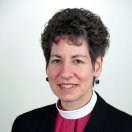
Episcopal Church Presiding Bishop-Elect Katharine Jefferts Schori on the Diane Rehm Show

Diane Rehm interviewed the Episcopal Church's newly elected Presiding Bishop-Elect, Katharine Jefferts Schori, this morning on her show on WAMU/NPR. I'm listening to it right now, and you can too. I like her. She has strongly-held views (many of which are quite liberal ones, it seems) but she seems very thoughtful and careful and committed both to mission (!) and to reconciliation. I don't know to what extent she'll be able to accomplish that reconciliation within the Episcopal Church and the larger Anglican Communion, but she and the Church she will lead are certainly in my prayers.

22 June 2006

I'm proud of my church

This time I'm not talking about either of the local disciple-communities I'm a part of (though I'm proud of both of them too!), but the larger denominational body that my big church is a part of: the Episcopal Church in the USA (ECUSA). And I'm sorry to say that I didn't expect to feel this way as we entered our 75th General Convention, in Columbus, Ohio, which just completed. I expected a lot of partisan infighting on topics like sexuality and perceived heresy. In that respect, I wasn't entirely proven wrong. There was fighting about other topics, too. Still, I'm very proud of this convention, overall, for at least three reasons:
  • The enthusiastic embrace of the Millennium Development Goals.
  • The election of our new Presiding Bishop-elect, the Rt. Rev. Katharine Jefferts Schori, with whom I'm quickly becoming quite impressed. I'm pretty sure she's the first female Archbishop in any major communion of the Church, which is certainly notable. But I'm more impressed by her apparent courage and commitment to bridge-building.
  • The last-ditch, heroic, and successful effort to produce a serious response to the Windsor Report - one that was painful and sacrificial for both the left and the right. (The Windsor Report was the worldwide Anglican Communion's response to the divisions that occurred in the Communion following the consent given by 2003's ECUSA General Convention to the election of an openly gay bishop in New Hampshire.) We have a church that's courageous enough to live the example of the Cross and committed to maintaining the loving communion of the Body of Christ, and I'm proud to be a part of her. More info here on The Center Aisle.

14 June 2006

Center Aisle

If you're interested in the goings-on at the 2006 General Convention of the Episcopal Church in the USA (which is going on right now in Columbus), I recommend that you check out the perspective offered by The Center Aisle, a moderate webzine (yes, we have moderates in the Episcopal Church, despite what you may have read) that's published by my own diocese, the Diocese of Virginia. Several folks whom I've met and regard highly (including Bishop Peter Lee, Fr. John Ohmer of St. James' in Leesburg, and Susan Daughtry Fawcett, who will soon join the clergy at Holy Comforter, my big church) are involved in writing, editing, and publishing the mag. It's full of good stuff.

I've only read one thing so far that I take issue with: the second "growth" goal in this article: "growth in numbers". I honestly don't think the Episcopal Church (or any church) should be concerning itself with numerical growth in membership. Membership, schmembership. I would hate to see our Anglican tradition wither and die (I don't think we'll let it), and I do (passionately) want to see us grow in discipleship, but if the institution called "The Episcopal Church in the USA" keeps on shrinking until the there's no point in keeping it up any more in anything like its current form, then I truly feel that the kingdom of God will keep breaking into this world in other forms, including ones that are both authentically Anglican and American. I hope and pray it doesn't happen - I don't want to see my denomination die! - but I think working of behalf of God's kingdom is far, far more important than working for the survival of an institution.

The other goals in the article ("growth in mission" and "growth in understanding and love with those with whom we disagree"), as well as the rest of the piece and the other stuff I've read, are spot-on, in my opinion.

Anyway, check it out!

12 June 2006

The heart of Anglicanism

Great post from Thunder Jones, on the eve of the General Convention of the Episcopal Church in the USA. I agree wholeheartedly with the formulation he quotes from Bishop William Sanders:

We share unity in the essentials of faith
We embrace diversity in the non-essentials of faith
We have charity in all

For you "emerging" folk who love the idea of "generous orthodoxy" (as do I) - sound familiar?

This more than anything else is why I love my Anglican tradition. May we be true to our heart as we enter into General Convention. Check out Thunder's post; it's brief and worth reading.

16 March 2006

Come and grow

So yesterday, I get an e-mail from A. Bowie Snodgrass, Web Content Editor of the Office of Communication of the Episcopal Church, saying that my blog was, at some point within the last year, one of the top 25 referring domains to the "Come and Grow" evangelism campaign of the national church. Frankly, that's a little scary. I love dearly each and every one of you readers of this humble blog, but one thing you aren't is numerous.

Anyway, Bowie wanted to know if I'd be willing to mention/link to a new survey regarding the future of the Episcopal Church's online evangelism, which is available on the Episcopal Church homepage until Friday, April 7. So, sure thing, sez I. The survey is interesting, and Bowie says that folks who aren't part of the Episcopal Church are especially welcome to fill it out. I myself will need to put some thought into my answers.

So, give it a look, and if you feel inspired to do so, fill out the survey. The church, I think, could sure use your help. Danke.

07 February 2006

Believe it or not....

OK, this is going to be a long and unusually confessional post, and many of you will think I'm very silly. So be it. You're right.

A couple of weeks ago, I was in a blue funk for really dumb reasons, particularly given that I've got several good friends with real challenges in their lives right now. But for good reason or for poor, I was mildly depressed due to frustration with various realities regarding my wonderful church, Church of the Holy Comforter. And I've become good friends with the folks at another church, Mars Hill Church, and in my little frustrated mind, everything that was "wrong" with Holy Comforter (CHC) was "right" with Mars Hill (MH). So (and this actually goes back a couple of months at least), my mantra has been "I'm not a consumer Christian," and I've been sternly telling myself that I will certainly not jump ship from my wonderful church that I love and which has helped me so much on my journey, especially when it might need me most. And all the while feeling sorry for myself. Poor me.

So last week I came to a question that was kind of like a decision: couldn't this be a both/and scenario? I didn't know. I confessed some of what was going on in my monkey brain to Fr. Rick and Fr. Lou at CHC and then to Deanna, who's on the leadership team at MH. Specifically, I asked Dee if she thought it would be OK if I gave myself permission to consider myself a "real" member of MH (I've been sort of "extended family" for a bunch of months now) and started showing up on Sundays sometimes, contributing financially and in other ways, and participating more in various manners - all without intentionally weakening my commitment to CHC. On Friday, Dee wrote me back, very graciously, and told me that as far as she was concerned, in a church with no formal membership, I was already a member by any meaningful measure, and they'd love to see more of me.

The rest of that Friday, I could be heard whistling the theme from that 80's TV, show, "The Greatest American Hero". Believe it or not, I'm walking on air.... :-)

So this past Sunday was a pretty emotional day for me, for lots of reasons. I got up at 6 AM to drive for the Hypothermia Response emergency shelter program being run by a couple of Fairfax County mission organizations (FACETS and the Lamb Center). The mission of that program is to prevent hypothermia deaths among the homeless population of Fairfax County by providing emergency overflow shelter in local churches when the permanent shelters are full - which is every winter night. The number of nightly guests is approaching seventy. So normally, the job of the driver is to pick guests up at the host church and drive them to the Lamb Center, where they'll be able to stay warm, get lunch, etc. But on Sundays, the Lamb Center is closed. So I had to drop these good people off in a parking lot on Rt. 29 in Fairfax, and watch them walk away from the van with nowhere really to go until evening. Let me tell you, brothers and sisters, that was a hard thing. I cried driving home.

I calmed down a bit by going for a jog, then got dressed up and went to CHC for Mother DeDe's going away reception. She's moving on in her journey and pursuing a doctorate in Christian Ethics, which is wonderful, but it was hard to say goodbye, even though we never got to know each other too well. Then I ushered at the 11 AM service, and it was a good thing I was in the back, because I was getting choked up - again - during Rick+'s sermon. His sermon was on 2 Kings 4:8-37, and to me, the story and Rick's sermon were completely about my friends Mike and Stacy, though I know this was only in my own mind.

After the service, I ran home, changed, wolfed down a slice of cold pizza, and rushed off to a FACETS property to participate with Mars Hill in their monthly "service worship"; in this case, helping clean the apartment of a FACETS client. This was so wonderful for me. I got to spend time talking with and getting to know better these incredible folks from what was now in my mind "my church" while helping somebody out who was so very sweet and happy to have us there. At one point we sent out a small shopping expedition to get some more cleaning supplies, and Dee suggested they also get something nice, like a bouquet of flowers. Well, our hostess was absolutely tickled pink about the flowers. For me, this was the highlight of an emotional rollercoaster of a day, even though there was more good stuff to follow. "Da da da da da, I'm walkin' on air...."

The "good stuff" that followed was an incredibly fun Super Bowl party at the home of Mars Hill's Diana and Paul, hostess and host extraordinaire. Great food and drink, and just a wonderful opportunity to relax and hang out and chat with folks - and a lot of folks from the church were there. And I guess there was some football game going on. I could tell by how worked up Israel was getting. ;-)

Holy cow, what a day. I got home around 11 PM and slept like a dead man for nine hours.

All right, now I need to rewind to the middle of last week. If you've stuck with me this far, you must love me. I said it would be long.

So early last week, I got invited to a CHC Missions meeting scheduled for this coming Monday. Frankly, I immediately dreaded it. It had to do with some of the things I mentioned that frustrated me about CHC, which in my mind were "right" about MH. In this case, what was bugging me was the fact that we tend to do ministry like a business meeting: show up once every few weeks or few months, pray for three minutes, run down an agenda for two hours, pray for three minutes, then "break!" and rush off to the next thing in our busy lives. Very little opportunity for fellowship or shared spiritual practice as a team. So midway through last week, I decided that I wasn't going to silently grumble and dread this. Instead, I'd suggest doing things a little differently. So I volunteered to show up 1/2 hour early and bring food and drink, and invited the rest of the team to come early too for some fellowship time with no agenda. And I also suggested that we spend the first 20 minutes of our "agenda" time in group reflection on a Bible passage - in this case, Luke 10:1-12.

Well, the response was overwhelming positive! Everybody loved the ideas, and most people showed up early and brought food and/or drink. We followed with a spirited and illuminating Bible study, and followed that with an equally spirited discussion of Missions priorities in which consensus was achieved on important matters about three minutes after we had collectively given up. It was a great meeting! "Believe it or not, I'm walkin' on air...."

It taught me two things: 1) never, ever silently grumble, especially about church matters, because you can't tell what the Spirit is up to! And 2) much of my frustration about CHC, like my angst over whether MH would want me to be a "real" member, has to do with my own mental blocks, not God's reality. So God, forgive me for my lack of faith! And thank You for, again and again and again, blessing me to a ridiculous degree. I know humans are pattern-seeking animals with an evolutionary predisposition to connect dots and interpret reality according to their own current assumptions. I'm a theist, and a strong believer in divine providence, so I'm going to look around and see the hand of God. I know this, but nonetheless, it's impossible for me not to see God's hand in bringing me here to Vienna, Virginia, and connecting me to not one, but two, gloriously wonderful communities of faith. Praise God, and thank you, churches. I love you all.

02 December 2005

Current month's Daily Office

I don't know if this will be useful to anyone but me, but just in case....

I made a web page that will always send you to the current month's Daily Office listing (according to the 1979 American Book of Common Prayer, Rite II) from Mission St. Clare. The URL is:

http://www.shunyata.net/new/do.php

Why is this useful? Well, it's useful for me because I can set it up as an AvantGo channel in my Treo smartphone and always (at least, until they restructure their web site) have the current Daily Office prayers in my pocket without needing to do any manual steps. I don't know why it might be useful to you, but you never know.

Update: I've added pages that take you straight to the current day's morning and evening prayer:

http://www.shunyata.net/new/domorn.php

http://www.shunyata.net/new/doeve.php

Also, for a great discussion on the value of praying in this fashion, see Scot McKnight's blog: this post on Praying with the Church and some follow-up posts too.