To finish up (for now) the prayer series, here's an intercessory prayer I composed as part of an exercise during my EFM class:
God is Love.
The world is broken.
We ask for wholeness
On behalf of all Your creatures
So that we may serve you and each other together in love.
In the name of God the Creator,
God in Christ,
and God the Spirit within creation.
12 March 2005


8 types of prayer for beginning and ending the day
Here's another in the series on prayer. This is a prayer I've evolved that I try to begin and end every day with. It's based on the types of prayer outlined in the catechism on pages 856 and 857 of the US Book of Common Prayer.
The catechism lists seven principle types of prayer:
Adoration, or the lifting up of the heart and mind to God, asking nothing but to enjoy God's presence.
Praise.
Thanksgiving.
Penitence.
Oblation, or offering one's self to God.
Intercession, or asking something on someone else's behalf.
Petition, or asking something on one's own behalf.
In thinking about Adoration, which is silent and nonconceptual, just enjoying the presence of God, it occurs to me that there are at least two other types of silent, nonconceptual prayer that I'm aware of:
Contemplation, or silently, nonconceptually inviting the inspiration of the Holy Spirit.
Via Negativa meditation, or what Buddhists call meditation on Emptiness--meditation on the limited, inaccurate nature of any concepts we humans might hold about God (or, for that matter, the universe).
So I believe I know at least nine different types of prayer (which should perhaps be distinguished from modes of prayer, such as said, sung, journalling, etc.) I've evolved a "just after waking up and just before going to sleep" prayer which includes eight of the nine. (Contemplation requires time commitment, no two ways about it, so it's not part of this relatively quick opening-and-closing-my-eyes routine.)
So: I start with Via Negativa or Emptiness meditation. If I'm burdened by any heavy concepts about God or the world around me (concepts left over from the day, the previous day, or from dreams), I just silently let them fall away until there's nothing left but the pure, beyond-concepts presence of God.
This usually brings a slight smile to my lips, and naturally leads into Adoration. I just spend a few seconds enjoying God's presence.
Adoration leads naturally to Praise. "God, you are my Everything," is how I usually verbalize it.
Praise leads to Oblation. "And I am Yours completely." As You are utterly All to me, I am utterly Yours.
Oblation leads to Thanksgiving. "Thank You, Mother (or Father)". I usually only verbalize those words, but I mentally recall and raise up to God the things I'm particularly thankful for.
Thanksgiving leads to Penitence. "I'm sorry, Father (or Mother)". As with Thanksgiving, I verbalize only those words but mentally recall and repent of my recent sins.
Penitence leads to Petition, as it always does in our liturgies. "May I serve You in newness of life." Having confessed my sins and been forgiven, please strengthen me to serve you as best I can instead of dwelling on them.
Petition leads to Intercession. "May all beings be happy." As above, I verbalize briefly, but mentally lift up to God the intercessions currently on my heart. This is also a token for the full prayer of the Four Immeasurables (see two or three posts ago).
So that's my little beginning-and-ending prayer. All in all, it only takes a few minutes. It's certainly arguable that it's an excellent example of my anal retentive nature: I want to make sure I cover all the bases. :-) But it works for me.
The catechism lists seven principle types of prayer:
Adoration, or the lifting up of the heart and mind to God, asking nothing but to enjoy God's presence.
Praise.
Thanksgiving.
Penitence.
Oblation, or offering one's self to God.
Intercession, or asking something on someone else's behalf.
Petition, or asking something on one's own behalf.
In thinking about Adoration, which is silent and nonconceptual, just enjoying the presence of God, it occurs to me that there are at least two other types of silent, nonconceptual prayer that I'm aware of:
Contemplation, or silently, nonconceptually inviting the inspiration of the Holy Spirit.
Via Negativa meditation, or what Buddhists call meditation on Emptiness--meditation on the limited, inaccurate nature of any concepts we humans might hold about God (or, for that matter, the universe).
So I believe I know at least nine different types of prayer (which should perhaps be distinguished from modes of prayer, such as said, sung, journalling, etc.) I've evolved a "just after waking up and just before going to sleep" prayer which includes eight of the nine. (Contemplation requires time commitment, no two ways about it, so it's not part of this relatively quick opening-and-closing-my-eyes routine.)
So: I start with Via Negativa or Emptiness meditation. If I'm burdened by any heavy concepts about God or the world around me (concepts left over from the day, the previous day, or from dreams), I just silently let them fall away until there's nothing left but the pure, beyond-concepts presence of God.
This usually brings a slight smile to my lips, and naturally leads into Adoration. I just spend a few seconds enjoying God's presence.
Adoration leads naturally to Praise. "God, you are my Everything," is how I usually verbalize it.
Praise leads to Oblation. "And I am Yours completely." As You are utterly All to me, I am utterly Yours.
Oblation leads to Thanksgiving. "Thank You, Mother (or Father)". I usually only verbalize those words, but I mentally recall and raise up to God the things I'm particularly thankful for.
Thanksgiving leads to Penitence. "I'm sorry, Father (or Mother)". As with Thanksgiving, I verbalize only those words but mentally recall and repent of my recent sins.
Penitence leads to Petition, as it always does in our liturgies. "May I serve You in newness of life." Having confessed my sins and been forgiven, please strengthen me to serve you as best I can instead of dwelling on them.
Petition leads to Intercession. "May all beings be happy." As above, I verbalize briefly, but mentally lift up to God the intercessions currently on my heart. This is also a token for the full prayer of the Four Immeasurables (see two or three posts ago).
So that's my little beginning-and-ending prayer. All in all, it only takes a few minutes. It's certainly arguable that it's an excellent example of my anal retentive nature: I want to make sure I cover all the bases. :-) But it works for me.
Sunday worship prayer
Well, at my usual tortoise pace, I seem to be doing a short blog series on prayers composed or altered by me. So here's another one. I usually pray something close to the following prayer when I arrive in the pew before Sunday morning worship:
God, thank you for bringing me to Your house
With Your people,
On Your day.
Please use this opportunity to shape me,
Mold me,
Form me,
Teach me,
Help be to become more fully
What I need to become
To better serve both you and my fellow creatures.
I ask in Jesus' name, Amen.
Then, upon returning to my pew after communion, I generally pray the same prayer, but with the "I's" changed to "we's" and with an additional thanksgiving, "And for feeding us with spiritual food."
God, thank you for bringing me to Your house
With Your people,
On Your day.
Please use this opportunity to shape me,
Mold me,
Form me,
Teach me,
Help be to become more fully
What I need to become
To better serve both you and my fellow creatures.
I ask in Jesus' name, Amen.
Then, upon returning to my pew after communion, I generally pray the same prayer, but with the "I's" changed to "we's" and with an additional thanksgiving, "And for feeding us with spiritual food."
24 January 2005
The Four Immeasureables: a Buddhist prayer
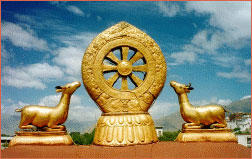 Well, after revising my version of the Lord's Prayer yesterday, I feel moved today to do a sort of similar adaptation of a central Buddhist prayer, "The Four Immeasurables." But instead of interpreting it in personal terms as I did the Lord's Prayer, I want to attempt to "translate" the concepts of this prayer into language familiar to North American Christians. So here goes:
O God, grant all of Your creatures happiness.
Grant all of Your creatures freedom from suffering.
Grant all of Your creatures perpetual, perfect joy.
Grant all of Your creatures peace and freedom from greed and prejudice.
Amen.
23 January 2005
Mike's interpretation of the Lord's Prayer, v2.0
Just over a year ago, I published my own "translation" or interpretation of the Lord's Prayer. You can read that post here if you want to. Since then, I've realized that that translation contained at least one glaring error: interpreting "hallowed be thy name" as a statement of fact instead of an expression of hope. So here's a second crack at it. I fixed that problem, and also included a take on the traditional doxology at the end.
"Pray, then, in this way."
Our beloved Mother-Father,
Not a thing, but the Source of all things,
May all that points to You be set apart and adored.
May we also come to yearn for
The world that You yearn for,
And may that world become our reality.
Help us to find what we really need today
To best serve You and our fellow creatures.
When we do wrong, don’t hold it against us.
Likewise, we won’t hold it against our brother or sister who wrongs us.
Help us to avoid that which will get us in trouble,
And when we do get in trouble, lead us safely home.
I can ask all this because there is a world, both Now and Not Yet, in which You reign,
Because You have the loving power to make that world real,
And because all of Your creation bears witness that this is true.
May it be so! (Amen)
"Pray, then, in this way."
Our beloved Mother-Father,
Not a thing, but the Source of all things,
May all that points to You be set apart and adored.
May we also come to yearn for
The world that You yearn for,
And may that world become our reality.
Help us to find what we really need today
To best serve You and our fellow creatures.
When we do wrong, don’t hold it against us.
Likewise, we won’t hold it against our brother or sister who wrongs us.
Help us to avoid that which will get us in trouble,
And when we do get in trouble, lead us safely home.
I can ask all this because there is a world, both Now and Not Yet, in which You reign,
Because You have the loving power to make that world real,
And because all of Your creation bears witness that this is true.
May it be so! (Amen)
08 January 2005
Thoughts on the Incarnation
For me, as for the Buddha, it all comes down to the question of suffering. Or, more accurately, it comes down to this thing called "The Human Condition", of which suffering is a major part, but so are things like immense joy, family (with all its big and little joys and sufferings), temptation (a dry word for the aching needs we feel), fear and anxiety, etc.--all tempered and made more poignant and "real" by their fragility and the reality that our time, and our experience of all of these things, is limited. How could we ever really trust (a synonym for "have faith in") a God who had not fully experienced these things? How could we turn, in the depths of our suffering, to a God who had spent all of his/her/its eternal so-called "existence" on some pedestal in heaven, wrinkling his/her/its nose in distaste at the pathetic unpleasentness that these pitiful creations seem to get themselves involved in?
Now, let me be clear--I believe in a God who fully experienced the depths of our sufferings and the heights of our fragile joys since the beginning, both before and after the Incarnation. But why do I believe this? What would bring me to that conclusion? Nothing more or less than the Incarnation itself--the idea that God poured God's self so immensely into this individual Jesus. In that life, ministry, death, and resurrection, I see God fully experiencing our Human Condition, and I see that it's an essential part of God's nature to do so. (It always has been, but without the Incarnation, I might have trouble believing that.) Seeing that, I can have confidence, trust, and faith in a God who, no matter how bad it gets, has been there.
That, for me, is much of the significance of the Incarnation. But I guess that's not exactly true, since it really seems to just amount to proving a point, and I think that in the Incarnation the Son of God came not just to make a point, but to save the world. But that's another big subject--actually, much bigger, since it encompasses Salvation and Discipleship and Mission and Eschatology and the Kingdom of God, and those five together make up a great deal of what Christianity is. :-)
Now, let me be clear--I believe in a God who fully experienced the depths of our sufferings and the heights of our fragile joys since the beginning, both before and after the Incarnation. But why do I believe this? What would bring me to that conclusion? Nothing more or less than the Incarnation itself--the idea that God poured God's self so immensely into this individual Jesus. In that life, ministry, death, and resurrection, I see God fully experiencing our Human Condition, and I see that it's an essential part of God's nature to do so. (It always has been, but without the Incarnation, I might have trouble believing that.) Seeing that, I can have confidence, trust, and faith in a God who, no matter how bad it gets, has been there.
That, for me, is much of the significance of the Incarnation. But I guess that's not exactly true, since it really seems to just amount to proving a point, and I think that in the Incarnation the Son of God came not just to make a point, but to save the world. But that's another big subject--actually, much bigger, since it encompasses Salvation and Discipleship and Mission and Eschatology and the Kingdom of God, and those five together make up a great deal of what Christianity is. :-)
01 January 2005
The uniqueness of Jesus?
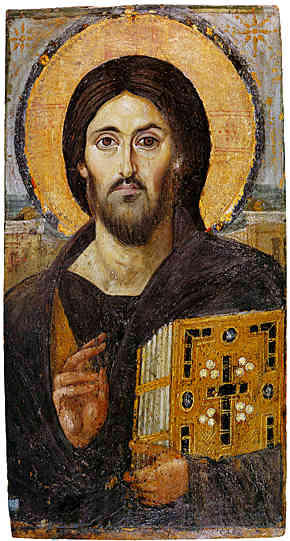
In response to a friend struggling with the Christian belief in the uniqueness of God's Incarnation in Jesus, I offered some of my own thoughts on the matter:
OK, to take a convenient starting point: I believe (in my postmodernfashion) that the traditional Christian model of God as a Trinity ofthree persons in communion is an authentic way to talk about God. (Postmoderns tend to like words like "authentic" and "genuine" better than ones like "true" and "objective" and "absolute".) I'm not saying it's The True Way to talk about God--I think that there are other very authentic models for God-talk, including the Jewish insistence on"Unity. Period." and the "ineffable Godhead and effable God" model of recent Christian theologians. But I believe that, as limited human concepts go, it's authentic.
Therefore, I think it's authentic to talk about a Son of God, one of three persons of the eternal Trinity. I think that Son of God has been active in the world throughout history--among other things, "standing at the door" of each of our hearts "and knocking," as the Book of Revelation says. I imagine the Son's been active in other ways, but I do believe that the most definitive, visible, and downright amazing way the Son of God has been active in our world was in the Incarnation in the human Jesus of Nazereth. I think that this Incarnation, including Jesus's life, teachings, healings, sufferings, death, and resurrection, in some mysterious way is instrumental and central to God's graceful plan of Salvation, whatever that is. I think that that manifestation of the Son of God in the Incarnation in Jesus of Nazareth is so amazing, that it's worth wholeheartedly devoting the rest of my life to following him (again, whatever that means--discipleship is another big topic.) And, I've found that the evidence in my own life and in the lives of those around me is that, once having made this decision, I can perceive the gifts of the Holy Spirit (that other person in that authentic model called Trinity) aiding me in my pursuit of discipleship--just as the Bible writers claimed.
None of this precludes the also-unique (but *for me*, not as definitive) workings of God in the lives of God's billions of other human children throughout history. I think God is clearly "incarnate" in God's creation in many, many ways, especially in human beings, but from my own point of view, in no case more definitively and in no case more salvifically (how's that for a big, undefined word) and and no case more worthy of my discipleship than in Jesus of Galilee.
Hope that helps. I'm not really trying to convince you of anything, just stating how for a postmodern like me, I find it possible to find deep, profound meaning in doctrines like the Incarnation without it being quite so rationally black-and-white and sounding like the big guy with the white beard turned into the little guy with the brown beard and it's a cut-and-dried as that.
Christmas giving
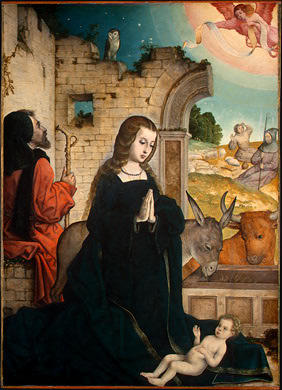
The following is a true story, though names have been changed to protect folks' privacy.
When I contacted Carolyn Mysel, Food and Holiday Committee chairperson at CHO, about my Discipleship Group's desire to adopt a family for Christmas, she responded with an e-mail describing briefly how the CHO holiday adoption process usually works (the adopting group contacts the family in need to find out about their needs--often food, clothing, and/or toys--then decides what they're able to give and makes an appointment to meet the family to deliver their donations). She also asked what sort of needs we thought we might be able to fulfill (essentially, our budget) so she could try to match us up with an appropriate family. But then, almost as an afterthought and without waiting for an answer to the question she'd just asked, Carolyn mentioned that she had been talking to a Latino family of three--husband, wife, and the wife's mom--who had fallen on hard times. The young wife, Carmen, was pregnant with the couple's first child, and it had become a very difficult pregnancy, to the extent that surgery had been necessary already, and Carmen had been prescribed constant bed rest for the remainder of her pregnancy--until April. Unfortunately, Carmen, a medical assistant, had been the sole breadwinner for the family,because her mother, Rosa, who had been a nurse in Uruguay, had not been able to find work in Virginia, and Carmen's husband Miguel did not yet have his working papers to be legally employed in the country. Now Carmen was not able to work.
Carolyn didn't know what this family's needs were for Christmas, and neither did I--nor did I know the answer to Carolyn 's question about our budget. But I felt that something (the Spirit?) had prompted Carolyn to suggest this family to us, so I said yes.
I called and spoke with Carmen, thinking, "They don't yet have any kids, so they don 't need toys. But they probably need food or clothing." But Carmen, who sounded tired but happy to talk to me, said that what she would really love more than anything would be a new mattress. The one they had had come from Goodwill, and was used, lumpy, and uncomfortable--especially for someone who faced spending the bulk of her time for the next 3 to 4 months resting on it! By the same token, she would also love to have a reclining chair of some kind--she was just thinking of a beach chair--so she could get out of bed and sit by the window sometimes. When I pressed her further, she said that her mom's bed was pretty uncomfortable too. Did they need food? Well, they had a source for food, but something special for Christmas might be nice. Clothing? Not really. They had all they needed.
I came away from this conversation thinking: What a wonderful family. God will help us to get them what they need, one way or the other. We weren't expecting their need to be furniture, but since it is, God will provide. Despite thinking this at that time, I was still fairly dumbfounded when God did, in fact, provide--again and again and again. As a group, we thought of ways in which we could call on other resources--other Discipleship Groups, for example--to help come up with the money for what could have been some rather expensive items. That didn't prove necessary. Patricia Kehler's colleague Jill had a twin bed she wanted to donate, perfect for mom Rosa. CHO had been holding onto a very lovely, comfy chair that both reclines and "stands up" at the flip of a switch, for just such a need. They also had a high-quality, like-new Queen-size mattress and box spring for Carmen and Miguel.
These latter items we delivered--some of the CHO furniture stalwarts,some friends of mine, and myself--the Friday a week before Christmas Eve. Carmen had somehow come by a reclining beach chair, and she was using it with obvious discomfort. She and her mom were thrilled to see us, and Rosa helped clear the way as we brought in the bed and the chair, and took their old bed back to the CHO truck, so it would in turn help someone else in need. Carmen moved to the sofa, and her eyes lit up as I installed, plugged in, and tried out her cool new chair. :-)
In the end, we as a group of 10+ ended up spending less than $200 on a turkey, some bed rails, and some grocery store gift cards so they can have a special holiday dinner or two. With that small investment, God has fulfilled (or is fulfilling) every need they told us about for Christmas, and then some. Further, I received much more than that in donations from members of the group at our meeting Monday night, which we'll use to help fulfill this family's ongoing needs. We've found out about some additional furniture needs which are less urgent--nightstands and dressers for their bedrooms. At present, between the generosity of group members and the resources of CHO, we know how we can fulfill 3 out of 4 of these needs right away! Also,they'll have ongoing needs for utility bills, food, and, as April approaches, baby items, and we plan to use our resources to help them with these needs, in partnership with another church that's also helping them. We've got a good start already, and I have confidence that for the most part we need only do as we have done and try to stay out of God's way and let God use us as instruments of God's love.
So after our meeting on the Monday night before Christmas, five of us from the group set out for Carmen's apartment with a turkey, gift cards, bed rails, love, and joy, not necessarily in that order. I led the caravan, and the group learned that this was not a wise idea, as I got us lost, not once but twice, in my own town. :-) Still, we made it, though I'm not sure they believed me when I said I just thought we'd like to see as many of our neighbors' Christmas lights as possible on the way. :-) We gathered outside the family's apartment door, after first trying to figure out if we knew any Christmas carols. We settled on "We Wish You a Merry Christmas." We knocked, and mom Rosa answered the door. We burst into song, and knew most of the words. :-) Rosa invited us in, and we entered. The apartment looked snug and warm and cheery--the table was set with warm red-and-green napkins and placemats, and they had a small artificial Christmas tree, which sparsely but prettily. All three family members were home, and all three greeted us warmly. Best of all, Carmen was looking very comfortable in her new comfy reclining chair--a major contrast to when I'd last seen her, looking somewhat pained and tired in the beach chair.
She was all smiles, and told us that she loved her new bed and chair. The chair had the unexpected bonus that they had set it up near their computer in the living room, and now she could keep in touch with her former co-workers at the medical center. She was clearly very happy about this, since she had had to stop working there so suddenly. We all introduced ourselves and chatted a little. Carmen mentioned that this has been especially difficult for her, because she's a bit of a workaholic, and now she can do hardly anything for herself! But she and her family were clearly happy and felt blessed, and wished us all a Merry Christmas. We wished them the same, and it seemed clear that they would have one, despite their difficulties. Since it was late (did I mention we got lost?), we didn't stay long, but were all struck, I think, by the general warmth and cheer in that apartment. It was there before we got there, but I think we were all thankful that God gave us the opportunity to add to it and also to become apart of it, and take some home with us.
Recycling
Well, folks, I've become something of a non-blogger lately. Been busy. To rectify that, I'm going to recycle some potentially interesting e-mails I've sent recently into blog entries. Some of them will touch on some of the topics I mentioned in the (relatively) recent "Placeholder" post. Most won't. Oh well.
13 November 2004
Born again

I'll write about some of the stuff I mentioned in the last post later. First, I must announce to the world what I announced to Tina one recent morning.
"Well, I'm born again." I said over breakfast.
She just blinked. She knows by now that sometimes it's best to wait these things out.
"I'm not kidding. I had a revelation in the middle of the night. Two nights in a row, in fact. Something not to be denied."
Blink.
"This is going to involve a real change in my life. I have no choice in the matter. You see, the chicken wings came home to roost."
Two evenings previous, I went to happy hour at On the Border with folks from work, and eaten the wings of about 50 chickens.
Digression: In the last couple of years, I'd developed two exceptions to my vegetarianism. First, I would eat meat if it was otherwise going to be thrown away. This makes a certain amount of sense, since I'm a vegetarianism for reasons of compassion. There's no compassionate justification for allowing an animal that's already been killed for food to end up rotting in a landfill, if you're not increasing the demand for meat. Second, I would eat meat when celebrating with friends from work. This makes zero freaking sense, except that a) I wanted to, and b) when I'm out with work friends, Tina's rarely present. Which brings me back to the obscene number of chicken wings I consumed that Thursday evening.
So that night, and the next night too, I spent several hours awake and sweating with really unpleasant tummy pain. I'm not convinced I can blame the second night on the wings, but emotionally, I'm ready to do so.
So: I'm born again. A born-again vegetarian. I'm perfectly happy to be Pavlovian and let the negative reinforcement of abdominal pain condition me to return to my vegetarian ideals.
So to all who read this: keep me honest. I thank you, my tummy thanks you, and the sentient beings I might otherwise devour thank ya kindly.
30 October 2004
Placeholder
Hola, amigos. I know it's been a while since I've rapped at ya. (Readers of The Onion are probably unsurprised that Jim Anchower is one of my literary inspirations.) Anyway, things have been busy lately, what with the re-start-up of the church program year and some traveling, etc. But I wanted to make a placeholder posting, to encourage me to actually write about some of the things that have been bubbling around in my head over the past couple of months. These include:
- Tina's Patients of Courage award.
- Our fantastic, harrowing, and spiritually edifying whitewater adventure.
- How nobody knows me like Amazon.com, and that frightens me a bit.
- Various musings on the church in the postmodern world, a topic on which I've been reading with great interest.
- Johnny Theremin.
- The Windsor Report.
- The Committee for Helping Others, and what current and future vacancies on their Board might mean for me.
So anyway, sometime soon, God willing and the creek don't rise, I'll be writing about all or many of those topics. Don't miss the excitement, the danger, the non-stop action.
Peace,
Mike
10 September 2004
Passion without certainty
I think this will be a short post.
I've been thinking a lot about something that's perplexed me since I was a kid. In fact, it's probably the thing, more than anything else, that kept me away from the church--and from any sort of organized religion--for so many years. It's really a question:
Why does religious certainty seem almost a prerequisite for religious passion?
In other words, why do the vast bulk of people who are passionate about their faith--people I've known, and people I've read about--seem to be folks for whom the mysteries of faith are not mysteries, but matters of intellectual certainty?
I'm never going to be one of those people. At times I've thought I was, but it didn't last. And I really don't want to be someone for whom faith holds no mystery. I'm comfortable with ambiguity. I guess that makes me postmodern. I just wish I felt like I had more company.
(In all fairness, I have plenty of company in my own church, which is one of the many reasons I love it so.)
I have a prayer: that all folks like me, for whom faith means relational trust but not intellectual certainty, won't let that stop them from passionate worship, passionate service, passionate discipleship, and passionate evangelism.
In the name of the Father, and of the Son, and of the Holy Spirit. Amen.
I've been thinking a lot about something that's perplexed me since I was a kid. In fact, it's probably the thing, more than anything else, that kept me away from the church--and from any sort of organized religion--for so many years. It's really a question:
Why does religious certainty seem almost a prerequisite for religious passion?
In other words, why do the vast bulk of people who are passionate about their faith--people I've known, and people I've read about--seem to be folks for whom the mysteries of faith are not mysteries, but matters of intellectual certainty?
I'm never going to be one of those people. At times I've thought I was, but it didn't last. And I really don't want to be someone for whom faith holds no mystery. I'm comfortable with ambiguity. I guess that makes me postmodern. I just wish I felt like I had more company.
(In all fairness, I have plenty of company in my own church, which is one of the many reasons I love it so.)
I have a prayer: that all folks like me, for whom faith means relational trust but not intellectual certainty, won't let that stop them from passionate worship, passionate service, passionate discipleship, and passionate evangelism.
In the name of the Father, and of the Son, and of the Holy Spirit. Amen.
29 August 2004
The Buddha and me
A close family friend asked me the following question in an e-mail:
You are still involved with Buddhism, is this a contradiction of thefaith you are studying? I am ignorant when it comes the philosophies and faith of the Buddhist. Please educate me on this point.
I thought my answer was worthwhile to incude in the blog:
Well, I'm definitely no longer a practicing Buddhist, though I was for three years and I feel that I gained a lot from it--among other things, I don't think I could ever really have been a practicing Christian without being a practicing Buddhist first. The reason for that is also the reason why I don't really think there's a contradiction between Buddhism and Christianity: Buddhism is a set of spiritual practices, but not really a system of beliefs or of faith. It doesn't say anything one way or the other about God or gods. It's completely agnostic.
Buddhism is essentially a set of practices (different types of meditation) to work on training your mind to tend less toward anger, greed, and other sins (the Christian term) and to tend more toward compassion, patience, and other virtues. There are basically two things that would count as "beliefs" in Buddhism--reincarnation and karma. Neither is (in my opinion) essential to Buddhism (meditation works whether you believe in them or not), and I didn't really believe in them for most of the time I was a practicing Buddhist anyway. (Karma, or the law of moral cause and effect, is found in the Bible--Proverbs 11:18 and lots of other places--but with the important caveat that God's grace trumps blind justice.) There are also lots of stories about various people--historical and otherwise--who developed great virtues and great control over their sinful tendencies, but these stories are also not a metter of faith and are much like the parables of Jesus or the stories of the Christian saints.
But despite that I don't think there's anything wrong with Buddhism, I realized two things about it a couple of years ago which told me that it 's not the path for me. First, since Buddhism is essentially all about meditation practice, it takes a lot of discipline to be a good Buddhist and practice consistently. I don't have that discipline. (There's a whole tradition in Christianity that's very similar to Buddhist meditation--contemplative prayer--that I may vary well pursue when I'm older and less flighty. St. Teresa of Avila, St. John of the Cross, Meister Eckhart, Fr. Thomas Keating, etc.)
The second thing was that Buddhism seemed to be missing something I needed. It wasn't until I returned to the Episcopal Church that I found out what it was I was missing--two things, actually. Our rector talks about three aspects of the Christian faith--worship, discipleship/formation, and mission/service. Buddhism is all about discipleship/formation; it has no aspect of worship (being agnostic) or mission (a fact which the Dalai Lama has taken Buddhists to task for again and again).
So I'm not longer a practicing Buddhist, but I keep the things I've learned from it as part of my spiritual equipment, so to speak. :-) And like I said, I think it was only because I had first practiced a spiritual discipline that didn't require belief that I could take the leap of faith and affirm the Christian creeds. Now I can't imagine living outside the context of a faith relationship with God, including worship, thanksgiving, prayer, and service, but six years ago I could never have gotten past intellectual problems with Christian belief. But last year, I could take the leap of faith, jump into Christian, and say "I believe, Lord, help my unbelief."
You are still involved with Buddhism, is this a contradiction of thefaith you are studying? I am ignorant when it comes the philosophies and faith of the Buddhist. Please educate me on this point.
I thought my answer was worthwhile to incude in the blog:
Well, I'm definitely no longer a practicing Buddhist, though I was for three years and I feel that I gained a lot from it--among other things, I don't think I could ever really have been a practicing Christian without being a practicing Buddhist first. The reason for that is also the reason why I don't really think there's a contradiction between Buddhism and Christianity: Buddhism is a set of spiritual practices, but not really a system of beliefs or of faith. It doesn't say anything one way or the other about God or gods. It's completely agnostic.
Buddhism is essentially a set of practices (different types of meditation) to work on training your mind to tend less toward anger, greed, and other sins (the Christian term) and to tend more toward compassion, patience, and other virtues. There are basically two things that would count as "beliefs" in Buddhism--reincarnation and karma. Neither is (in my opinion) essential to Buddhism (meditation works whether you believe in them or not), and I didn't really believe in them for most of the time I was a practicing Buddhist anyway. (Karma, or the law of moral cause and effect, is found in the Bible--Proverbs 11:18 and lots of other places--but with the important caveat that God's grace trumps blind justice.) There are also lots of stories about various people--historical and otherwise--who developed great virtues and great control over their sinful tendencies, but these stories are also not a metter of faith and are much like the parables of Jesus or the stories of the Christian saints.
But despite that I don't think there's anything wrong with Buddhism, I realized two things about it a couple of years ago which told me that it 's not the path for me. First, since Buddhism is essentially all about meditation practice, it takes a lot of discipline to be a good Buddhist and practice consistently. I don't have that discipline. (There's a whole tradition in Christianity that's very similar to Buddhist meditation--contemplative prayer--that I may vary well pursue when I'm older and less flighty. St. Teresa of Avila, St. John of the Cross, Meister Eckhart, Fr. Thomas Keating, etc.)
The second thing was that Buddhism seemed to be missing something I needed. It wasn't until I returned to the Episcopal Church that I found out what it was I was missing--two things, actually. Our rector talks about three aspects of the Christian faith--worship, discipleship/formation, and mission/service. Buddhism is all about discipleship/formation; it has no aspect of worship (being agnostic) or mission (a fact which the Dalai Lama has taken Buddhists to task for again and again).
So I'm not longer a practicing Buddhist, but I keep the things I've learned from it as part of my spiritual equipment, so to speak. :-) And like I said, I think it was only because I had first practiced a spiritual discipline that didn't require belief that I could take the leap of faith and affirm the Christian creeds. Now I can't imagine living outside the context of a faith relationship with God, including worship, thanksgiving, prayer, and service, but six years ago I could never have gotten past intellectual problems with Christian belief. But last year, I could take the leap of faith, jump into Christian, and say "I believe, Lord, help my unbelief."
08 August 2004
Evangelism: too important to be left to the evangelicals
I think I might have quite a bit to say on the topic of evangelism as time goes on. I sense a growing interest in the subject within my church, and it's a topic for the coming year's Christian education curriculum. And ever since I took this course called LifeKeys and it indicated that evangelism might be among my spiritual gifts, I've been thinking about it a lot.
"But wait," you are perhaps saying, "given what you've previously said about exclusivism, pluralism, and salvation, why on earth would you want to run around converting people to Christianity?" Well, just because I don't think being a Christian is a prerequisite for salvation doesn't mean that I don't think being a Christian is a wonderful thing. I myself have undergone--and am continuing to undergo--a conversion experience to Christianity, and I consider myself much the better for it, to say the least.
I think there are many, many people who are "unsaved" for whom an encounter with the risen Christ could be the occasion for their salvation. (See my previous post regarding my belief about the nature of salvation--I reiterate that I don't consider it to be necessarily linked to historical Christianity, but is certainly can be.) I also think that there are many people who are saved but have no connection to any religious community or practice, and that these things can be very valuable aids to living out your salvation and developing your relationship with the divine.
I'm not looking to take people who have healthy, improving relationships with God, Allah, or their Buddha Nature and substitute their working practice with a copy of mine. That's pointless. But for those in search of faith, or possessing faith but in search of practice, an encounter with God in Christ might be just what they need. And I think it's certainly incumbent upon Christians to get out there and make those encounters possible--Great Commission and all that. I think it's a great failing of many in the mainline Christian denominations that we don't do that--either because we don't know how, or because our own pluralism makes us think it's not necessary. But that's a cop-out, and I suspect it's a cover story for lack of courage, because it seems self-evident to me that there's a great need to spread the Good News, whether you're a pluralist or not, for the reasons outlined above. And the wages of apathy will be the continued shrinking of the mainline denominations until they exist only in history books.
There's another reason why liberal Christians need to get on the stick with evangelism. If we leave it to the conservative evangelicals, there will be many who will never be reached. In our postmodern, secularist society, lots of people are simply never going to be conservative, Bible-believing evangelicals. It's just not going to happen. Lots of people simply can't check their brains--and often their hearts--at the church door in the way that many conservative churches require them to. In this day and age, if belief in a literal, worldwide Flood and a literal, eternal Hell are presented as prerequisites for being born again, many people will choose to hold on to the birth they've got now, the one that lets them hold onto science and compassion. And that's the way the Good News is being told by most of those who bother telling it! In my opinion, that's a crime. But it's something that I think at least some of us "mainline, liberal" Christians are starting to realize we can do something about.
"But wait," you are perhaps saying, "given what you've previously said about exclusivism, pluralism, and salvation, why on earth would you want to run around converting people to Christianity?" Well, just because I don't think being a Christian is a prerequisite for salvation doesn't mean that I don't think being a Christian is a wonderful thing. I myself have undergone--and am continuing to undergo--a conversion experience to Christianity, and I consider myself much the better for it, to say the least.
I think there are many, many people who are "unsaved" for whom an encounter with the risen Christ could be the occasion for their salvation. (See my previous post regarding my belief about the nature of salvation--I reiterate that I don't consider it to be necessarily linked to historical Christianity, but is certainly can be.) I also think that there are many people who are saved but have no connection to any religious community or practice, and that these things can be very valuable aids to living out your salvation and developing your relationship with the divine.
I'm not looking to take people who have healthy, improving relationships with God, Allah, or their Buddha Nature and substitute their working practice with a copy of mine. That's pointless. But for those in search of faith, or possessing faith but in search of practice, an encounter with God in Christ might be just what they need. And I think it's certainly incumbent upon Christians to get out there and make those encounters possible--Great Commission and all that. I think it's a great failing of many in the mainline Christian denominations that we don't do that--either because we don't know how, or because our own pluralism makes us think it's not necessary. But that's a cop-out, and I suspect it's a cover story for lack of courage, because it seems self-evident to me that there's a great need to spread the Good News, whether you're a pluralist or not, for the reasons outlined above. And the wages of apathy will be the continued shrinking of the mainline denominations until they exist only in history books.
There's another reason why liberal Christians need to get on the stick with evangelism. If we leave it to the conservative evangelicals, there will be many who will never be reached. In our postmodern, secularist society, lots of people are simply never going to be conservative, Bible-believing evangelicals. It's just not going to happen. Lots of people simply can't check their brains--and often their hearts--at the church door in the way that many conservative churches require them to. In this day and age, if belief in a literal, worldwide Flood and a literal, eternal Hell are presented as prerequisites for being born again, many people will choose to hold on to the birth they've got now, the one that lets them hold onto science and compassion. And that's the way the Good News is being told by most of those who bother telling it! In my opinion, that's a crime. But it's something that I think at least some of us "mainline, liberal" Christians are starting to realize we can do something about.
Highly recommended: a trip to hell and back
I was thinking earlier this week about how my attitude toward life has changed since the two-year period during which my Bipolar Disorder symptoms were in full big-band swing. That included two winters (1998-1999 and 1999-2000) of severe clinical depression. During those winters, I spent months on end without a moment's happiness, confidence, clarity of mind or desire for human contact. My life has been blessed from childhood until the present, and I certainly can't claim to know true suffering, but within the range of my own experience, this was definitely the bottom. This was the bottom dropped out and dumped me into what lies below. Within the range of my own experience, this was hell.
Then, in March of 2000, my shrink got the drug cocktail right. I wasn't depressed any more. Haven't been since--not in the clinical sense. I visited hell, and then I came back. It went away. It was reversed. I got my "get out of jail free" card, and I blew that popsicle stand. And ever since, I've never (well, hardly ever) lost a strong sense that life is a gift, a blessing, something to be lived to the fullest and something for which no amount of thankfulness would begin to scratch the surface.
Now, I recognize that all of this has a lot to do with brain chemistry, which in my case is still being managed with a combination of lithium and something called risperdal, an antipsychotic. (No, I was at no point actually psychotic.) Also, as I've alluded to previously, as dark as it got during those two deep, gray winters, I never completely lost hope. There was no point when I really believed that it would never get better, and for that I'm immensely thankful as well--it's the reason I'm still alive. But on the whole, I have to count the whole experience as an astonishing blessing. A trip to hell and back may be the second-best thing that's ever happened to me. (Marrying Tina, who's the other reason I'm still alive, is the best.)
But the key is the "and back" part. Like the guy that got turned into the newt in Monty Python and the Holy Grail, "I got better." Most people who do time in hell--in various hells of varying depths--never get to come back. When a loved one dies or is otherwise irrevocably separated from you, you don't come back. Not completely. Most people who live in conditions of affliction, extreme poverty, or terror don't get the sort of miraculous reversal that I was blessed with. So I'm not trying to argue that suffering is a good thing--far from it. But paradoxically, suffering, then suffering negated, was a blessing for me.
I know many people who can't believe that suffering could ever be God's will. God may (and does) turn suffering to good, but she never intends that it happen in the first place. As for me, I just don't know. When I look at my life, I don't know if it was God's will that I go through my depressions. Maybe there was no other way to wake me up. When I look at the life of Jesus Christ, I don't know whether it was God's will that he suffer and die on the cross. I certainly don't believe in a vindictive God who desires blood sacrifice, but it seems to me that the Christian story might require that the Passion was a necessity, not just an unfortunate accident that God turned to the great work that is the Resurrected Christ and the life he gives to his followers.
Hmm. I guess the message is that whatever the theological reality behind it (and, as usual, I'm more-or-less content to leave that a mystery), I'm living proof that the experience of suffering can become a blessing. If that has any chance of bringing a modicum of comfort to other folks in the midst of their own private hell, then please spread the word.
Then, in March of 2000, my shrink got the drug cocktail right. I wasn't depressed any more. Haven't been since--not in the clinical sense. I visited hell, and then I came back. It went away. It was reversed. I got my "get out of jail free" card, and I blew that popsicle stand. And ever since, I've never (well, hardly ever) lost a strong sense that life is a gift, a blessing, something to be lived to the fullest and something for which no amount of thankfulness would begin to scratch the surface.
Now, I recognize that all of this has a lot to do with brain chemistry, which in my case is still being managed with a combination of lithium and something called risperdal, an antipsychotic. (No, I was at no point actually psychotic.) Also, as I've alluded to previously, as dark as it got during those two deep, gray winters, I never completely lost hope. There was no point when I really believed that it would never get better, and for that I'm immensely thankful as well--it's the reason I'm still alive. But on the whole, I have to count the whole experience as an astonishing blessing. A trip to hell and back may be the second-best thing that's ever happened to me. (Marrying Tina, who's the other reason I'm still alive, is the best.)
But the key is the "and back" part. Like the guy that got turned into the newt in Monty Python and the Holy Grail, "I got better." Most people who do time in hell--in various hells of varying depths--never get to come back. When a loved one dies or is otherwise irrevocably separated from you, you don't come back. Not completely. Most people who live in conditions of affliction, extreme poverty, or terror don't get the sort of miraculous reversal that I was blessed with. So I'm not trying to argue that suffering is a good thing--far from it. But paradoxically, suffering, then suffering negated, was a blessing for me.
I know many people who can't believe that suffering could ever be God's will. God may (and does) turn suffering to good, but she never intends that it happen in the first place. As for me, I just don't know. When I look at my life, I don't know if it was God's will that I go through my depressions. Maybe there was no other way to wake me up. When I look at the life of Jesus Christ, I don't know whether it was God's will that he suffer and die on the cross. I certainly don't believe in a vindictive God who desires blood sacrifice, but it seems to me that the Christian story might require that the Passion was a necessity, not just an unfortunate accident that God turned to the great work that is the Resurrected Christ and the life he gives to his followers.
Hmm. I guess the message is that whatever the theological reality behind it (and, as usual, I'm more-or-less content to leave that a mystery), I'm living proof that the experience of suffering can become a blessing. If that has any chance of bringing a modicum of comfort to other folks in the midst of their own private hell, then please spread the word.
12 July 2004
Go Green!! Celtics Forever!! (Er, wait, that's a baskeball team.)
Being of Celtic ancestry, it pleases me to no end that I keep finding out cool things about the Celtic people. Among them:
- We were royally bitched out by no less a figure than St. Paul in his Epistle to the Galatians. (It's in the Bible!) The "Gal"atians--etymologically related to Gaelic and Gaul, lived in a portion of modern-day Turkey that was conquered in previous times by Celtic folks, but by Paul's day was a Roman province. (Fucking Romans.)
- The French people's most patriotic nickname for themselves--Gauls--is derived from Gaul or Gallia, a Celtic land that once stretched from France through Switzerland to Germany. From this vantage point, the Celts once opened a can of whup-ass on the Roman empire, but eventually the Romans drove them to the fringes of Europe, such as the British Isles and eventually Ireland and Scotland. (Fucking Romans.)
- We fought with King Arthur against the Saxons invading Britain, and kicked their Saxon hineys six ways to Sunday. (You can see a fictionalized yet entertaining movie about this at your local theater.) This, of course, was after the Romans turned tail and ran: after centuries of slaughtering Bretons, they'd decided that they didn't want that grubby little island after all. (Fucking Romans.)
Later, of course, there's a long, proud, brave, sad, and joyous history in Ireland, Scotland, Wales, and elsewhere. I'm not much of a history buff. Even religious history is interesting to me only so far as there's a clear relevance to our life today. But there are a lot of good stories about the Celts (some of which may actually have happened), and I may continue to see what other ones I can find.
- We were royally bitched out by no less a figure than St. Paul in his Epistle to the Galatians. (It's in the Bible!) The "Gal"atians--etymologically related to Gaelic and Gaul, lived in a portion of modern-day Turkey that was conquered in previous times by Celtic folks, but by Paul's day was a Roman province. (Fucking Romans.)
- The French people's most patriotic nickname for themselves--Gauls--is derived from Gaul or Gallia, a Celtic land that once stretched from France through Switzerland to Germany. From this vantage point, the Celts once opened a can of whup-ass on the Roman empire, but eventually the Romans drove them to the fringes of Europe, such as the British Isles and eventually Ireland and Scotland. (Fucking Romans.)
- We fought with King Arthur against the Saxons invading Britain, and kicked their Saxon hineys six ways to Sunday. (You can see a fictionalized yet entertaining movie about this at your local theater.) This, of course, was after the Romans turned tail and ran: after centuries of slaughtering Bretons, they'd decided that they didn't want that grubby little island after all. (Fucking Romans.)
Later, of course, there's a long, proud, brave, sad, and joyous history in Ireland, Scotland, Wales, and elsewhere. I'm not much of a history buff. Even religious history is interesting to me only so far as there's a clear relevance to our life today. But there are a lot of good stories about the Celts (some of which may actually have happened), and I may continue to see what other ones I can find.
09 July 2004
Mike and Ann (and Mel)
I was just thinking: I'm sort of a lukewarm fan of Michael Moore. I think he's much more effective when he's focused on shaming people into correcting a specific injustice--such as unfair layoffs or the like--than when he's just shoveling big ol' spoonfuls of steaming propaganda, as in Farenheit 9/11. As to the former, I really am sorry that he makes decent people feel bad to achieve his ends, but while I'm a pretty nonviolent person, I have to say that I believe that public shame and ridicule are valid--not to mention effective--weapons in the fight for social justice. Everybody believes that the ends justify the means to some extent, depending on the ends and the means, and I happen to be just Machiavellian enough to approve of Moore's more focused campaigns to right wrongs.
As to the latter--the heaping helpings of well-mixed fact and bullshit that constitute most of the content of his books and movies--well, they're certainly well-executed, but I find them a bit harder to swallow. Clearly there are people who will be mislead by some of his BS (though I suspect that most of his fans and enemies are savvy enough to take his claims with a certain amount of salt), and clearly this is entirely OK with him. Still, F911 is no more or less full of lies than, say, the latest Ann Coulter book. But despite being almost infinitely more photogenic, Ann apparently can't make a movie worth a damn, or she probably would have made one by now. So tough noogies to Ann. When it comes to art, even artistically presented moo-cow droppings, the left wing wins every time. Ha!
(Er--still waiting for a left-wing religious movie as powerful as that reactionary crackpot Mel Gibson's film from earlier this year...so maybe not every time.)
As to the latter--the heaping helpings of well-mixed fact and bullshit that constitute most of the content of his books and movies--well, they're certainly well-executed, but I find them a bit harder to swallow. Clearly there are people who will be mislead by some of his BS (though I suspect that most of his fans and enemies are savvy enough to take his claims with a certain amount of salt), and clearly this is entirely OK with him. Still, F911 is no more or less full of lies than, say, the latest Ann Coulter book. But despite being almost infinitely more photogenic, Ann apparently can't make a movie worth a damn, or she probably would have made one by now. So tough noogies to Ann. When it comes to art, even artistically presented moo-cow droppings, the left wing wins every time. Ha!
(Er--still waiting for a left-wing religious movie as powerful as that reactionary crackpot Mel Gibson's film from earlier this year...so maybe not every time.)
25 June 2004
Life after life
It occurred to me that, after my last post (in which I minimized the relative importance of the afterlife in Jesus' message) some among my throngs of constant readers might be wondering exactly what I think about life after death.
Well, hmm. As I said in the previous post, It's important to me to take the Bible seriously. So what does Scripture say? It's clear that in Old Testament times Hebrews believed in a shadowed, Hades-like half-afterlife called Sheol. In the New Testament (as I mentioned) little is said on the subject, when compared with other topics. What is said seems to present a variety of points of view, and interestingly much talk about the afterlife--particularly from Jesus--is in the context of parables, such as the story of Lazarus and the rich man (Luke 16:19-31). Certainly both Jesus and Paul--especially Paul--were steeped in the Jewish tradition of the Pharisees, and one of the distinguishing tenets of the Pharasaic worldview was belief in the resurrection of the dead. This became an important facet of early Christianity, and is enshrined in the Nicene Creed: "We look for the resurrection of the dead, and the life of the world to come."
So what does all this mean? Well, opinions differ. The authors of the Bible and the creeds weren't writing science, and certainly didn't consider themselves as doing anything of the sort. What they were doing, often in the language of story, was hinting at holy mysteries. The creed itself, in contrast to other statements it makes, uses somewhat mysterious language: we "look for" the resurrection of the dead; we haven't found it yet. Many people feel that they can discern from reading the Bible precisely what is meant by this resurrection of the dead, and exactly what will happen to each of us after we die. I think they're fooling themselves. I think it's a mystery, a holy mystery--one to tell stories, myths, and parables about. One of my favorite stories about the resurrection of the dead was told by Martin Smith, SSJE. Fr. Martin talked about how we and everything that we contribute to God's Creation will certainly live forever in the indestructible memory of God.
So life after death is a mystery? Tell stories about it, but don't hang your hat on any concrete beliefs about it? That's neither very original nor very satisfying. So is there anything that I could say about the afterlife that I really think is solid and "true", like I think gravity and the love of God are true?
For a goodly portion of the time when I was a practicing Buddhist, I believed quite sincerely in the scientific reality or reincarnation. Sentient beings die, and in a relatively short period of time, they're reborn in a new form. To be sure, I thought we were like a flame being passed from wick to wick, where only in the loosest sense could the 57th flame be said to be the same flame as the first. But I was basically an orthodox Buddhist on the subject of life after death. However, by the time I read Stephen Bachelor's Buddhism Without Beliefs (highly recommended), I had already come to the conclusion that the scientific reality of the doctrines of karma and reincarnation were peripheral to Buddhism, and I didn't really believe in them in any case.
Here's what I do believe, "scientifically." Physicists teach us that in this universe, matter and energy are never destroyed. I believe that goes for whatever the heck we really are. The memory of God does not fail. And as my wise wife told me, whether there's life after death or not, we certainly live forever--from our point of view. It's just a matter of whether "forever" extends beyond the moment of our death or not.
Which brings me back to the beginning. There are many ways to interpret the phrase "the life of the world to come," but like I said in the last post, when Jesus spoke of "Kingdom come," he was almost always talking about something that can come into this life: here, now, and for the rest of our lives, if we just let it. And if we choose to live in this Kingdom, we need not fear death, just as we need not fear life. Both hold many mysteries, but none more mysterious than the mystery of salvation: of the call of grace and the response of faith, and the promise of citizenship in the Kingdom of Heaven on Earth.
Well, hmm. As I said in the previous post, It's important to me to take the Bible seriously. So what does Scripture say? It's clear that in Old Testament times Hebrews believed in a shadowed, Hades-like half-afterlife called Sheol. In the New Testament (as I mentioned) little is said on the subject, when compared with other topics. What is said seems to present a variety of points of view, and interestingly much talk about the afterlife--particularly from Jesus--is in the context of parables, such as the story of Lazarus and the rich man (Luke 16:19-31). Certainly both Jesus and Paul--especially Paul--were steeped in the Jewish tradition of the Pharisees, and one of the distinguishing tenets of the Pharasaic worldview was belief in the resurrection of the dead. This became an important facet of early Christianity, and is enshrined in the Nicene Creed: "We look for the resurrection of the dead, and the life of the world to come."
So what does all this mean? Well, opinions differ. The authors of the Bible and the creeds weren't writing science, and certainly didn't consider themselves as doing anything of the sort. What they were doing, often in the language of story, was hinting at holy mysteries. The creed itself, in contrast to other statements it makes, uses somewhat mysterious language: we "look for" the resurrection of the dead; we haven't found it yet. Many people feel that they can discern from reading the Bible precisely what is meant by this resurrection of the dead, and exactly what will happen to each of us after we die. I think they're fooling themselves. I think it's a mystery, a holy mystery--one to tell stories, myths, and parables about. One of my favorite stories about the resurrection of the dead was told by Martin Smith, SSJE. Fr. Martin talked about how we and everything that we contribute to God's Creation will certainly live forever in the indestructible memory of God.
So life after death is a mystery? Tell stories about it, but don't hang your hat on any concrete beliefs about it? That's neither very original nor very satisfying. So is there anything that I could say about the afterlife that I really think is solid and "true", like I think gravity and the love of God are true?
For a goodly portion of the time when I was a practicing Buddhist, I believed quite sincerely in the scientific reality or reincarnation. Sentient beings die, and in a relatively short period of time, they're reborn in a new form. To be sure, I thought we were like a flame being passed from wick to wick, where only in the loosest sense could the 57th flame be said to be the same flame as the first. But I was basically an orthodox Buddhist on the subject of life after death. However, by the time I read Stephen Bachelor's Buddhism Without Beliefs (highly recommended), I had already come to the conclusion that the scientific reality of the doctrines of karma and reincarnation were peripheral to Buddhism, and I didn't really believe in them in any case.
Here's what I do believe, "scientifically." Physicists teach us that in this universe, matter and energy are never destroyed. I believe that goes for whatever the heck we really are. The memory of God does not fail. And as my wise wife told me, whether there's life after death or not, we certainly live forever--from our point of view. It's just a matter of whether "forever" extends beyond the moment of our death or not.
Which brings me back to the beginning. There are many ways to interpret the phrase "the life of the world to come," but like I said in the last post, when Jesus spoke of "Kingdom come," he was almost always talking about something that can come into this life: here, now, and for the rest of our lives, if we just let it. And if we choose to live in this Kingdom, we need not fear death, just as we need not fear life. Both hold many mysteries, but none more mysterious than the mystery of salvation: of the call of grace and the response of faith, and the promise of citizenship in the Kingdom of Heaven on Earth.
13 June 2004
What is salvation?
At the moment, this is the top hit from Google for the phrase that's the title of this post. Go ahead and read it; it's not too long. I'll wait right here.
Have you read it? Good. Here's what I say about that: Bullshit.
Uh, Mike, did I just hear you call a nice story about a grandma and her grandkids and cocoa and cookies "bullshit"? Yep. Mike, have you been watching too much of the Penn and Teller show of that name on Showtime? Yep.
Anyway, the thing I'm picking on in that nice story isn't the exclusivism (which I've discussed previously), and I've certainly got no problem with encouraging kids to confess Christian faith as long as you're not coercing them into it. (Though one should keep in mind that it's too, too easy to coerce a child. Hence statutory rape laws.) My problem is with this, which is really the bit that attempts to answer the titular question:
"Grandma, do you mean God sent His Son so I won't ever get lost again, like I did last week in the mall?" asked Shane.
"No, Shane, that's not the kind of lost Jesus is talking about," said Grandma. "When these verses tell us we're lost, it means we won't be able to spend forever with God after we die here on earth."
Bullshit. Sometimes I think Jesus spent all that time in his three-year ministry talking about the Kingdom of God just to have his followers as blissfully clue-free as the scribes and Pharisees he contended with himself. The Kingdom of God, aka the Kingdom of Heaven, is not some place we go to when we die if we've confessed to faith in Jesus. Jesus said, "The Kingdom of God is within [or among] you." (Luke 17:21) !! Not later. Not after death. Here, now. Belinda Carlisle said, "Ooh, Heaven is a place on earth." This former Go-Go was paying attention! Are most Christians paying attention to the full weight of Jesus' teaching? Sometimes I don't think so.
I think that to claim that salvation is about what happens to you after you die is to seriously miss the point of Jesus' ministry. Jesus preached a Kingdom of Heaven that was constantly trying to break into our living, everyday reality. Salvation is to be handed the keys to Heaven right now. The moment you're born again, the moment you open the door of your heart, you're a citizen of Heaven, and you have access to that Heaven at any time. You may not always remember that--in fact, being human, it's a cinch that we won't--but that door is open. You don't have to wait until you die to go in.
By the same token, hell is a place on earth. Just ask somebody in the depths of clinical depression. Just ask that guy in the hood with the electrodes attached to him at Abu Ghraib. But that's also bullshit. Because I know firsthand that for someone suffering clinical depression, but with a lifeline of Faith, Hope, and Love, hell can't completely take over. By the same token, if that poor guy in the Iraqi prison was saved (by which I don't mean "if he was a Christian"--see a previous post), then although he was doubtlessly terrified out of his ever-loving mind, I don't believe he was in hell. But the high-powered CEO, on top of the world, might be living every moment of every day in hell if he's never opened his heart to the one who stands at the door and knocks, and says "be compassionate, as your Father in Heaven is compassionate".
Anyway, that's my answer to "What is salvation?" It's got nothing to do with dying--although for one who is born again, the day you die can be just another day in paradise (to quote that other '80's pop theologian, Phil Collins). It's about living a life in which the Kingdom of God is within you, and the love and compassion of God is the law of this interior country.
Having said that, I think I'm not going to go back and write all that exegesis I promised in the post on exclusivism/pluralism. I think I've said what I wanted to say about salvation. If anybody reads this and wants me to back it up with more Bible interpretation, let me know.
Have you read it? Good. Here's what I say about that: Bullshit.
Uh, Mike, did I just hear you call a nice story about a grandma and her grandkids and cocoa and cookies "bullshit"? Yep. Mike, have you been watching too much of the Penn and Teller show of that name on Showtime? Yep.
Anyway, the thing I'm picking on in that nice story isn't the exclusivism (which I've discussed previously), and I've certainly got no problem with encouraging kids to confess Christian faith as long as you're not coercing them into it. (Though one should keep in mind that it's too, too easy to coerce a child. Hence statutory rape laws.) My problem is with this, which is really the bit that attempts to answer the titular question:
"Grandma, do you mean God sent His Son so I won't ever get lost again, like I did last week in the mall?" asked Shane.
"No, Shane, that's not the kind of lost Jesus is talking about," said Grandma. "When these verses tell us we're lost, it means we won't be able to spend forever with God after we die here on earth."
Bullshit. Sometimes I think Jesus spent all that time in his three-year ministry talking about the Kingdom of God just to have his followers as blissfully clue-free as the scribes and Pharisees he contended with himself. The Kingdom of God, aka the Kingdom of Heaven, is not some place we go to when we die if we've confessed to faith in Jesus. Jesus said, "The Kingdom of God is within [or among] you." (Luke 17:21) !! Not later. Not after death. Here, now. Belinda Carlisle said, "Ooh, Heaven is a place on earth." This former Go-Go was paying attention! Are most Christians paying attention to the full weight of Jesus' teaching? Sometimes I don't think so.
I think that to claim that salvation is about what happens to you after you die is to seriously miss the point of Jesus' ministry. Jesus preached a Kingdom of Heaven that was constantly trying to break into our living, everyday reality. Salvation is to be handed the keys to Heaven right now. The moment you're born again, the moment you open the door of your heart, you're a citizen of Heaven, and you have access to that Heaven at any time. You may not always remember that--in fact, being human, it's a cinch that we won't--but that door is open. You don't have to wait until you die to go in.
By the same token, hell is a place on earth. Just ask somebody in the depths of clinical depression. Just ask that guy in the hood with the electrodes attached to him at Abu Ghraib. But that's also bullshit. Because I know firsthand that for someone suffering clinical depression, but with a lifeline of Faith, Hope, and Love, hell can't completely take over. By the same token, if that poor guy in the Iraqi prison was saved (by which I don't mean "if he was a Christian"--see a previous post), then although he was doubtlessly terrified out of his ever-loving mind, I don't believe he was in hell. But the high-powered CEO, on top of the world, might be living every moment of every day in hell if he's never opened his heart to the one who stands at the door and knocks, and says "be compassionate, as your Father in Heaven is compassionate".
Anyway, that's my answer to "What is salvation?" It's got nothing to do with dying--although for one who is born again, the day you die can be just another day in paradise (to quote that other '80's pop theologian, Phil Collins). It's about living a life in which the Kingdom of God is within you, and the love and compassion of God is the law of this interior country.
Having said that, I think I'm not going to go back and write all that exegesis I promised in the post on exclusivism/pluralism. I think I've said what I wanted to say about salvation. If anybody reads this and wants me to back it up with more Bible interpretation, let me know.
The Da Vinci Cash Cow
It's been a while since I've been in a real, books-and-mortar bookstore, as opposed to lurking around Amazon.com. But last night Tina and I stopped by our local Barnes and Noble while we had time to kill between dinner and a movie. I wandered, as is my custom, into the Religion section. Holy crap! I was rather shocked and a little dismayed to see what The Da Vinci Code had done to my favorite corner of the bookstore.
Bullshit to the right of me! "Ah," thought I. "A book from the religious right on how The Da Vinci Code is wrong and evil and full of hate and lies. I thought I'd heard that someone had written one of those." (I always thought "lies" was more or less a synonym for "fiction", and everybody knew that, but that's just me.) "Oh look--another one. And another one." There must have been 6 or 8 of them, just counting the ones that were turned cover-out because the book vendors thought they'd be top sellers. The Truth Behind the Da Vinci Code! Cracking Da Vinci's Code! Breaking the Da Vinci Code! De-Coding Da Vinci! Da Vinci Code: Fact or Fiction? (not to be confused with Fact and Fiction in The Da Vinci Code.) The Da Vinci Hoax! (No, all the titles don't have exclamation points, but they might as well.) Boy, it sure is a good thing for these guys and their publishers that Dan Brown wrote that evil, evil book.
Bullshit to the left of me! Then I started to notice the other books of "scholarship" that were newly in abundance. Most of them didn't make direct reference to the Code in their titles, but they picked up on themes in the book and took them out into left field, up over the fence, out through the atmosphere, and for a nice giddy jaunt around the moon. Now, just to be clear, I finished reading the Code a week ago, and I quite enjoyed it as an exciting thriller, though I thought the so-called experts in symbology and cryptology were pretty slow on the uptake in figuring out some fairly obvious puzzles. But they were operating on very little sleep. Also, I had read a bunch about the book on the internet before reading it, and I had probably heard about the use of such things as anagrams and reverse writing beforehand. In any event, there was much in the book (religious history, art history, etc.) that, even given my limited knowledge, I could tell was pulled out of Mr. Brown's left ear, or some such orifice. That's his prerogative as a writer of fiction, and he used that time-honored craft to great effect--it really is a fun read. But now I'm seeing "scholarly" treatises on how Jesus and Mary of Magdala did indeed marry, have kids, and joyfully worship the Goddess together along with the "real" early Christians after the faked crucifixion. It's proved! We've got facts!
Right. Actually, I'm more amused than disturbed by all of this. Good clean fun, for the most part, though I don't have much patience for people (left or right) who take what they know to be bullshit and present it as fact. And I have only slightly more tolerance for people who take stuff based on the thinnest of evidence and present that as the Gospel truth and make a bundle off it from people for whom their message has psychological or emotional appeal. There's fiction--it doesn't claim to be true or meaningful; it's just fun and maybe somewhat thought-provoking. Like The Da Vinci Code. There's myth--doesn't claim to be true (in the historical or scientific sense), but does claim to be meaningful, and many find meaning in it. Like much of religious literature. There's fact--stuff that overwhelming evidence indicates is probably true in the historical or scientific sense. Like, well, most of modern history and science writing. And then there's bullshit--stuff that claims to be fact while being based on scant evidence or on no evidence at all, or stuff that claims the status of myth but hasn't stood the test of time. A lot of the derivative Code books seem to fall into the last category--they present as truth claims that are based on myth or on "history" written before the modern concept of history was formed. (Both the Bible and the Gnostic scriptures fall largely into the categories of myth and premodern "history".) Sometimes these modern "truth" claims are based simply on fiction--whether it was made up in the first, 13th, 19th, or 21st centuries--stuff that people just invented and that doesn't really deserve the status of myth.
It's all fine, but I wish they'd have the good sense that Dan Brown did and call their nonsense a novel. Then all that crap would be in the fiction section instead of cluttering up my beloved religion shelves. ;-)
Bullshit to the right of me! "Ah," thought I. "A book from the religious right on how The Da Vinci Code is wrong and evil and full of hate and lies. I thought I'd heard that someone had written one of those." (I always thought "lies" was more or less a synonym for "fiction", and everybody knew that, but that's just me.) "Oh look--another one. And another one." There must have been 6 or 8 of them, just counting the ones that were turned cover-out because the book vendors thought they'd be top sellers. The Truth Behind the Da Vinci Code! Cracking Da Vinci's Code! Breaking the Da Vinci Code! De-Coding Da Vinci! Da Vinci Code: Fact or Fiction? (not to be confused with Fact and Fiction in The Da Vinci Code.) The Da Vinci Hoax! (No, all the titles don't have exclamation points, but they might as well.) Boy, it sure is a good thing for these guys and their publishers that Dan Brown wrote that evil, evil book.
Bullshit to the left of me! Then I started to notice the other books of "scholarship" that were newly in abundance. Most of them didn't make direct reference to the Code in their titles, but they picked up on themes in the book and took them out into left field, up over the fence, out through the atmosphere, and for a nice giddy jaunt around the moon. Now, just to be clear, I finished reading the Code a week ago, and I quite enjoyed it as an exciting thriller, though I thought the so-called experts in symbology and cryptology were pretty slow on the uptake in figuring out some fairly obvious puzzles. But they were operating on very little sleep. Also, I had read a bunch about the book on the internet before reading it, and I had probably heard about the use of such things as anagrams and reverse writing beforehand. In any event, there was much in the book (religious history, art history, etc.) that, even given my limited knowledge, I could tell was pulled out of Mr. Brown's left ear, or some such orifice. That's his prerogative as a writer of fiction, and he used that time-honored craft to great effect--it really is a fun read. But now I'm seeing "scholarly" treatises on how Jesus and Mary of Magdala did indeed marry, have kids, and joyfully worship the Goddess together along with the "real" early Christians after the faked crucifixion. It's proved! We've got facts!
Right. Actually, I'm more amused than disturbed by all of this. Good clean fun, for the most part, though I don't have much patience for people (left or right) who take what they know to be bullshit and present it as fact. And I have only slightly more tolerance for people who take stuff based on the thinnest of evidence and present that as the Gospel truth and make a bundle off it from people for whom their message has psychological or emotional appeal. There's fiction--it doesn't claim to be true or meaningful; it's just fun and maybe somewhat thought-provoking. Like The Da Vinci Code. There's myth--doesn't claim to be true (in the historical or scientific sense), but does claim to be meaningful, and many find meaning in it. Like much of religious literature. There's fact--stuff that overwhelming evidence indicates is probably true in the historical or scientific sense. Like, well, most of modern history and science writing. And then there's bullshit--stuff that claims to be fact while being based on scant evidence or on no evidence at all, or stuff that claims the status of myth but hasn't stood the test of time. A lot of the derivative Code books seem to fall into the last category--they present as truth claims that are based on myth or on "history" written before the modern concept of history was formed. (Both the Bible and the Gnostic scriptures fall largely into the categories of myth and premodern "history".) Sometimes these modern "truth" claims are based simply on fiction--whether it was made up in the first, 13th, 19th, or 21st centuries--stuff that people just invented and that doesn't really deserve the status of myth.
It's all fine, but I wish they'd have the good sense that Dan Brown did and call their nonsense a novel. Then all that crap would be in the fiction section instead of cluttering up my beloved religion shelves. ;-)
Subscribe to:
Posts (Atom)